


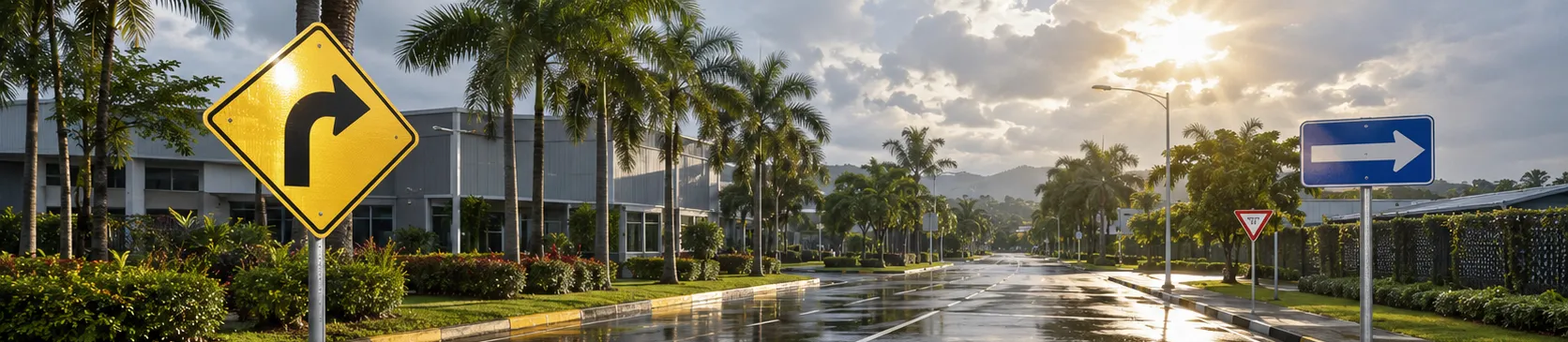
Reflective sheeting used in tropical, coastal, and other hot and humid regions faces a different environment from materials installed in mild and dry climates.
High temperatures, strong sunlight, frequent rainfall, moisture, and large temperature changes can all influence the long-term performance of an outdoor sign system.
For buyers, the challenge is not simply finding the brightest reflective sheeting.
The material must also work properly with the adhesive, substrate, printing process, installation environment, and expected outdoor service life.
This is especially important for sign manufacturers, distributors, road-safety suppliers, and contractors working in regions such as Southeast Asia, tropical Africa, coastal areas, and Latin America.
This guide explains what buyers should check when selecting reflective sheeting for hot and humid climates.
Quick Answer: What Matters Most in Hot and Humid Climates?
When choosing reflective sheeting for a hot and humid environment, pay attention to these factors:
Face-film construction
Adhesive system
Substrate compatibility
UV and weather resistance
Application temperature
Surface moisture
Outdoor durability
Printing method
Storage conditions
Sample testing
The reflective grade itself is only one part of the decision.
A higher-reflectivity product does not automatically provide better adhesion or better resistance to heat and humidity.
How Do Heat and Humidity Affect Reflective Sheeting?
Reflective sheeting is a multilayer material.
Depending on the product, it may include:
Protective surface layer
Reflective optical structure
Face film
Adhesive
Release liner
These components respond differently to environmental conditions.
That means a problem that looks like "reflective sheeting failure" may actually come from the adhesive, substrate, installation, storage, or surface treatment rather than the reflective layer itself.
1. High Temperature Can Affect Adhesive Behavior
Pressure-sensitive adhesives depend on proper contact between the adhesive layer and the substrate.
Temperature affects how easily the adhesive flows and bonds to the surface.
Very cold conditions can make some films more rigid and reduce initial tack.
Warmer conditions can make films softer and adhesives more aggressive.
ORAFOL, for example, states that warmer temperatures and higher humidity can make self-adhesive films more pliable and aggressive, while colder and drier conditions can make them more rigid and less tacky. It also recommends following the specific technical datasheet for each film rather than applying one universal temperature rule. orafol.com
This is why installation conditions matter even if the finished sign will later operate in a much hotter climate.
2. Humidity Is Especially Important During Application
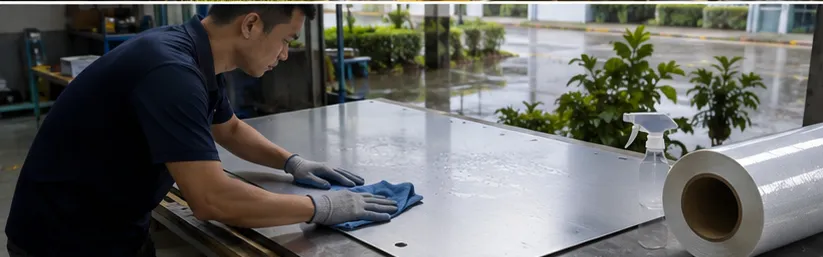
High air humidity alone does not automatically mean reflective sheeting will fail.
The bigger concern during installation is moisture on the substrate.
For example, an aluminum sign panel may look dry but develop a thin layer of condensation when moved between an air-conditioned room and a warm outdoor environment.
If reflective sheeting is applied over moisture, the adhesive may not achieve full contact with the substrate.
This can later contribute to:
Edge lifting
Bubbles
Local adhesive failure
Peeling
The application surface should therefore be clean and completely dry.
3. Rain and Water Exposure Matter After Installation
Outdoor signs in humid regions may experience frequent rain, storms, road spray, or repeated wet-dry cycles.
A properly installed reflective sheeting system is designed to handle outdoor exposure, but actual durability depends on the specific product.
Buyers should check whether the technical information covers:
Outdoor use
Weather resistance
Moisture exposure
Recommended substrate
Expected service life
Do not assume every reflective film is designed for permanent outdoor use simply because it is reflective.
4. Strong UV Exposure Is Another Major Factor
Many hot-climate regions also receive strong sunlight.
UV exposure can affect:
Face films
Pigments
Printed inks
Clear coatings
Adhesive systems
Over time, poor UV stability may contribute to:
Color fading
Surface deterioration
Reduced appearance
Changes in material properties
For long-term outdoor projects, weather resistance should therefore be considered together with reflective performance.
Face Film: PVC, PET or Acrylic?
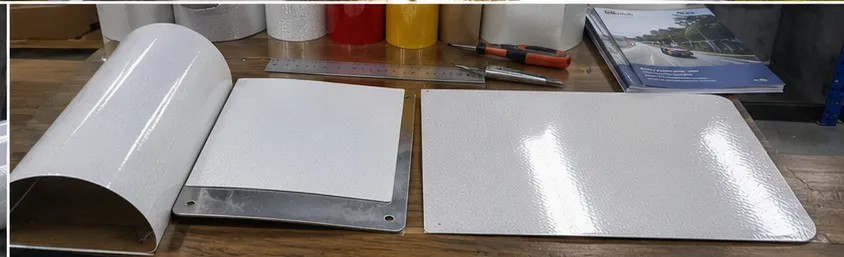
One common question is:
Which material is best for hot and humid climates: PVC, PET, or Acrylic?
There is no universal answer.
The correct choice depends on the product construction and application.
PVC Reflective Sheeting
PVC reflective vinyl is commonly used for:
Advertising signs
Printed commercial graphics
Promotional signage
Reflective decals
General commercial applications
Its major advantage is processing flexibility.
Printable PVC grades may support:
Eco-solvent printing
Solvent printing
Digital printing
For example, ABLAZE printable PVC reflective vinyl is designed for commercial signage and printable reflective applications rather than rigid engineering traffic systems. zhnewmaterial.com
For hot and humid outdoor use, buyers should confirm the expected outdoor durability of the exact PVC product rather than assuming all PVC materials perform the same way.
PET Reflective Sheeting
PET is commonly selected for flat and rigid sign applications.
Its advantages can include:
Good dimensional stability
Stable cutting performance
Suitability for flat aluminum panels
Semi-rigid construction
ABLAZE Engineering Grade PET reflective sheeting, for example, is designed for flat aluminum traffic sign panels and uses an enclosed glass-bead structure with a pressure-sensitive adhesive. zhnewmaterial.com
PET can therefore be useful when the main application is a flat rigid sign.
However, it is still important to confirm:
Outdoor durability
Printing compatibility
Recommended application temperature
Adhesive requirements
for the exact product.
Acrylic Reflective Sheeting
Acrylic is often associated with good weatherability in outdoor film systems, but buyers should avoid assuming:
Acrylic = automatically longer life.
Actual durability depends on the complete construction.
Different acrylic reflective materials can have very different outdoor lifespans depending on:
Formulation
Coating
Adhesive
Optical structure
Intended application
For example, ABLAZE offers different acrylic-based reflective products for different production systems and applications, with different durability specifications. zhnewmaterial.com
Therefore, material name alone should never replace the technical datasheet.
Choose the Adhesive System Carefully
In hot and humid climates, adhesive selection deserves as much attention as the reflective layer.
A buyer should ask:
Is the adhesive permanent?
Is it pressure-sensitive?
Which substrates are recommended?
Is it designed for outdoor use?
What application temperature is recommended?
Does the substrate require special treatment?
The reflective film may have excellent optical performance but still fail if the adhesive is not suitable for the surface.
Substrate Compatibility Is Critical
Reflective sheeting is often applied to:
Aluminum
Painted metal
Plastic
Composite sign panels
The surface should generally be:
Smooth
Stable
Clean
Dry
Free from oil
Free from loose coatings
Some plastics can also release gases after manufacturing.
ORAFOL recommends testing certain plastic substrates by applying a small strip and checking for bubbling or edge lifting before full application. orafol.com
For a new substrate, sample testing is much safer than assuming compatibility.
Hot Climate Does Not Automatically Mean You Need HIP
This is an important distinction.
Reflective grade and climate resistance are not the same thing.
HIP reflective sheeting is selected mainly because of its higher retroreflective performance.
It may be useful for:
Traffic signs
Warning signs
Road-safety applications
Longer viewing distances
But a commercial sign in a tropical city does not automatically need HIP simply because the weather is hot.
Likewise, choosing HIP does not automatically solve:
Adhesive problems
Surface contamination
Incorrect installation
Poor storage
Choose the reflective grade based on visibility requirements.
Choose the material construction and adhesive based on the environmental and processing requirements.
Consider the Application First
A simple way to select material is to start from the final use.
Commercial Advertising Signs
Important factors:
Printability
Color appearance
Cost
Outdoor life
Ease of processing
A printable PVC or another commercial reflective grade may be appropriate.
Parking and Property Signs
Important factors:
Moderate visibility
Flat-panel adhesion
Cost efficiency
Outdoor durability
Engineering Grade may be suitable depending on the project.
Traffic Signs
Important factors:
Nighttime visibility
Viewing distance
Retroreflective performance
Outdoor durability
Project requirements
Engineering Grade or HIP may be considered depending on the application.
Industrial Safety Signs
Important factors:
Visibility
Chemical/environmental exposure
Substrate
Installation location
The correct product depends on whether the sign is indoors, outdoors, temporary, or long term.
Application Conditions Matter as Much as Product Selection
Even a suitable outdoor reflective material can perform poorly if installation is incorrect.
Before applying reflective sheeting:
Clean the Surface
Remove:
Dust
Oil
Grease
Moisture
Loose paint
Make Sure the Substrate Is Dry
This is particularly important in humid climates.
Avoid applying film over:
Rainwater
Condensation
Cleaning liquid
Trapped moisture
Allow Materials to Acclimate
If reflective rolls are stored in an air-conditioned warehouse and then immediately moved into a hot production area, the material and liner may need time to reach the local processing conditions.
Avery Dennison recommends conditioning reflective sheeting to the use environment before processing and notes that temperature and relative humidity influence handling and storage behavior. graphics.averydennison.com
Apply Uniform Pressure
Pressure-sensitive adhesives require sufficient contact with the substrate.
Use suitable:
Squeegees
Rollers
Laminating equipment
according to the production method.
Give Newly Applied Material Time to Stabilize
Immediately moving a freshly applied sign from a controlled factory into extreme heat, rain, or humidity may not be ideal for some adhesive systems.
ORAFOL recommends allowing newly applied graphics time in the application environment to promote uniform adhesion before major temperature changes. orafol.com
The exact conditioning time should follow the supplier's technical instructions.
Storage Is Especially Important in Humid Regions
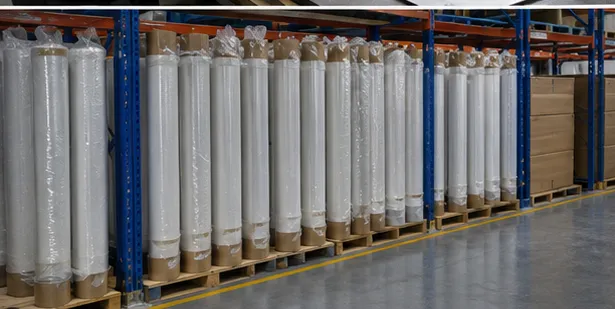
Many reflective sheeting problems begin before installation.
Hot warehouses and uncontrolled humidity can affect:
Release liner flatness
Film handling
Adhesive characteristics
Printing
Cutting
Avery Dennison notes that temperature and relative humidity can affect both storage life and processing behavior of self-adhesive materials. Deviations in humidity can affect backing paper and lay-flat properties, while prolonged high temperatures may affect adhesive properties and face-film finish. graphics.averydennison.com
Good storage practice includes:
Keep material in original packaging
Protect it from direct sunlight
Keep the warehouse clean and dry
Avoid prolonged excessive heat
Follow the manufacturer's recommended storage conditions
Do not exceed the stated shelf life
Some manufacturers specify storage conditions around 20°C and roughly 50% relative humidity for particular reflective products, but these are product-specific recommendations, not universal values for every reflective film. orafol.com
Printing Also Needs Attention
If the reflective sheeting will be printed, climate is only one consideration.
The face film must also match the printing system.
Depending on the product, printing methods may include:
Eco-solvent
Solvent
UV
Screen printing
Latex
Thermal transfer
For example, ABLAZE's current product guidance separates PVC, PET, and acrylic products according to different printing and processing routes rather than recommending one material for every printing method. zhnewmaterial.com
Always test your actual:
Reflective sheeting + printer + ink + curing conditions
before mass production.
What Should Buyers Ask Their Supplier?
Before purchasing reflective sheeting for a tropical or humid market, send the supplier detailed information.
A useful inquiry should include:
Application
For example:
Traffic sign
Parking sign
Commercial sign
Factory safety sign
Climate
Tell the supplier if the final market is:
Hot
Humid
Coastal
High UV
Heavy-rain environment
Substrate
For example:
Aluminum
Painted metal
Plastic
Composite board
Printing Method
For example:
Screen printing
UV printing
Eco-solvent printing
Plotter cutting
Required Service Life
Do you need:
Short-term advertising
Medium-term signage
Long-term outdoor use?
Reflective Performance
Specify whether the application needs:
General visibility
Engineering performance
Higher nighttime visibility
This information allows the supplier to recommend the correct product instead of guessing from price alone.
Common Mistakes in Hot and Humid Markets
Mistake 1: Choosing Only by Reflectivity
A highly reflective material can still fail if the adhesive or substrate is unsuitable.
Mistake 2: Applying Film to a Damp Surface
Moisture can prevent proper adhesive contact.
Mistake 3: Assuming “Water Resistant” Means Installation Conditions Do Not Matter
A finished outdoor product may resist rain, but it still needs a clean and dry surface during application.
Mistake 4: Ignoring Storage Conditions
Heat and humidity can affect handling before the film even reaches the sign panel.
Mistake 5: Choosing Material Only by Polymer Name
Not every acrylic product is automatically superior to PET or PVC.
The complete product construction matters.
Mistake 6: Skipping Sample Testing
A small test on the real substrate can reveal problems before a large shipment or production run.
Recommended Sample Tests Before Bulk Ordering
For new markets or applications, test:
Surface appearance
Adhesion
Edge lifting
Color
Reflectivity
Printing
Cutting
Application to the real substrate
If possible, expose a finished sample to the intended environment before committing to a large project.
FAQ
Does high humidity reduce reflective brightness?
Not necessarily.
Humidity itself does not automatically reduce retroreflectivity. The main concerns are moisture during application, long-term weather exposure, and whether the complete product system is designed for the environment.
Is HIP better for tropical climates?
HIP offers higher retroreflective performance, but it is not automatically more suitable simply because the climate is tropical.
Climate resistance and reflective grade should be evaluated separately.
Which is better for hot climates: PET or acrylic?
Neither is universally better.
PET is often useful for stable flat-panel applications, while acrylic constructions can offer different weatherability and processing characteristics.
Always compare the exact product datasheet.
Can reflective sheeting be applied when the surface is wet?
It should generally be applied to a clean and dry approved substrate unless the manufacturer specifically states otherwise.
Should reflective sheeting be stored in an air-conditioned warehouse?
Controlled storage can help maintain product and liner stability, but the correct conditions depend on the product.
Follow the manufacturer's storage instructions and allow material to acclimate before processing if necessary.
Bottom Line
Choosing reflective sheeting for a hot and humid climate requires more than selecting a reflective grade.
A good decision should consider:
Application → Climate → Face Film → Adhesive → Substrate → Processing → Installation → Outdoor Durability
Heat, humidity, rain, and UV exposure can create demanding conditions, but many failures can be reduced through correct product selection, proper storage, dry surface preparation, and sample testing.
Most importantly:
Do not choose reflective sheeting only by price, brightness, or material name.
Choose the complete material system that fits the real application.
Reflective Sheeting Solutions from ABLAZE
ABLAZE, manufactured by Changzhou Zhenghe New Material Technology Co., Ltd., supplies reflective materials for traffic safety, commercial signage, industrial identification, and other visibility applications.
Our current product range includes:
PVC reflective vinyl
PET reflective sheeting
Acrylic reflective sheeting
Other safety and visibility materials
ABLAZE's product portfolio covers different reflective technologies, face films, printing methods, and application requirements. zhnewmaterial.com
For customers in hot, humid, or tropical markets, we recommend providing your country, application, substrate, printing method, required color, roll size, expected outdoor life, and quantity before ordering.
Our team can then recommend a suitable product and provide samples for testing before bulk production.
RELATED NEWS

Sun, Sand and a 50°C Container: Getting Reflective Sheeting Through a Hot Climate
In hot regions, reflective sheeting can start ageing before it reaches the sign shop. UV, heat, dust and humidity each attack a different part of the product, and each needs its own defence.Picture a distributor in a hot coastal city who receives a container of prismatic sheeting in midsummer. It si
