


In most traffic sign refurbishment projects, applying a new full sheet of reflective sheeting directly over old, weathered reflective sheeting is not the preferred method.
The old film may look flat, but years of sunlight, rain, dirt and cleaning can change its surface.
If the old layer later lifts, cracks or separates from the aluminum panel, the new reflective sheeting attached to it can fail as well.
For a more reliable refurbishment, the normal approach is:
Remove the old sheeting → clean and inspect the aluminum panel → apply the new sheeting to a properly prepared surface.
There are special overlay films and graphic systems specifically designed to be applied over compatible reflective sheeting. These should not be confused with covering an old sign face with another complete layer of reflective sheeting.
Why Is Old Reflective Sheeting a Poor Surface?
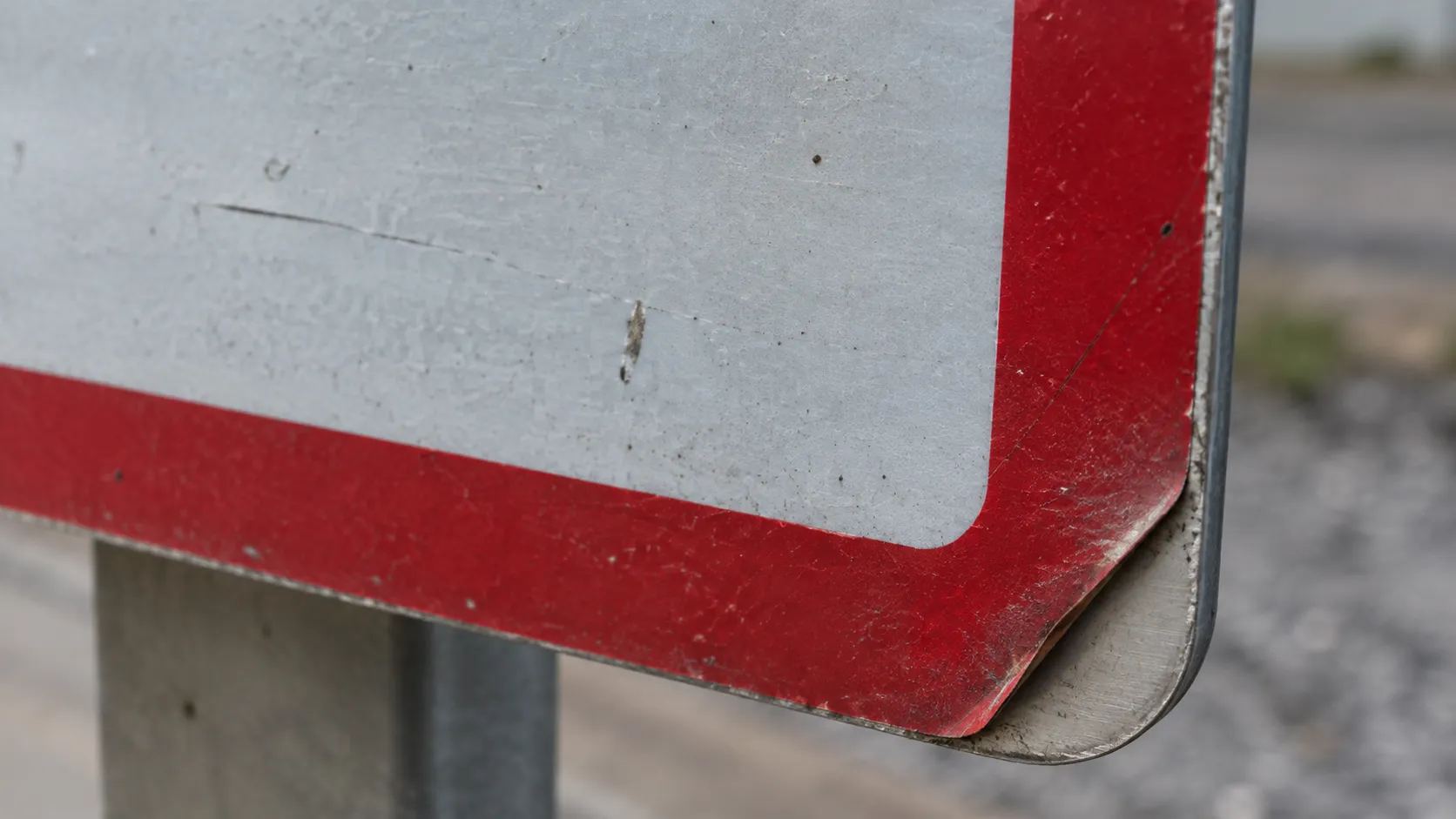
Old reflective sheeting may have:
Road dirt
Oil contamination
Fine scratches
Weathered surface coating
Old screen-printing ink
Small cracks
Edge lifting
Surface chalking
Weak adhesion to the aluminum underneath
Even if the new film sticks initially, its long-term performance still depends on the condition of the old layer.
This creates two adhesive interfaces:
New sheeting → old sheeting
and
Old sheeting → aluminum panel
If the second bond is already weak, a strong new adhesive cannot repair it.
What Problems Can Happen?
Edge Lifting
Old reflective film often begins aging at exposed edges.
Placing new film over those edges does not make the old layer stable again.
Moisture, dirt and temperature changes can continue working underneath the new material.
Bubbles or Uneven Surface
Scratches, old graphics, damaged edges and trapped contamination can create an uneven surface.
These defects may become visible through the new sheeting.
Poor Adhesion
The surface chemistry of aged reflective film can be different from clean aluminum.
Dust, wax, oil or old coatings can also reduce adhesive contact.
Old Film Can Pull the New Film Off
This is the biggest practical problem.
The new reflective sheeting may bond well to the old surface, but if the old sheeting separates from the panel, both layers can come away together.
That is why the condition of the substrate underneath matters as much as the adhesive on the new film.
Are There Any Exceptions?
Yes, but the distinction is important.
Some manufacturers offer transparent overlay films, protective films or cut graphics specifically designed for application onto compatible reflective sheeting.
For example, Avery Dennison publishes overlay systems designed for use on its reflective sheeting, while ORAFOL specifically warns against reflective-sheeting-over-reflective-sheeting installation for certain vehicle marking products. This shows why the answer depends on the exact material system rather than a universal rule.
These engineered overlays are different from taking a second roll of normal reflective sheeting and covering an old traffic sign.
If a project requires:
Transparent traffic colors
Protective overlay
Anti-graffiti film
Cut reflective graphics
check whether the manufacturer approves that exact combination.
Do not assume that because one overlay product is compatible, any reflective film can be layered over another.
A Better Way to Refurbish an Old Sign
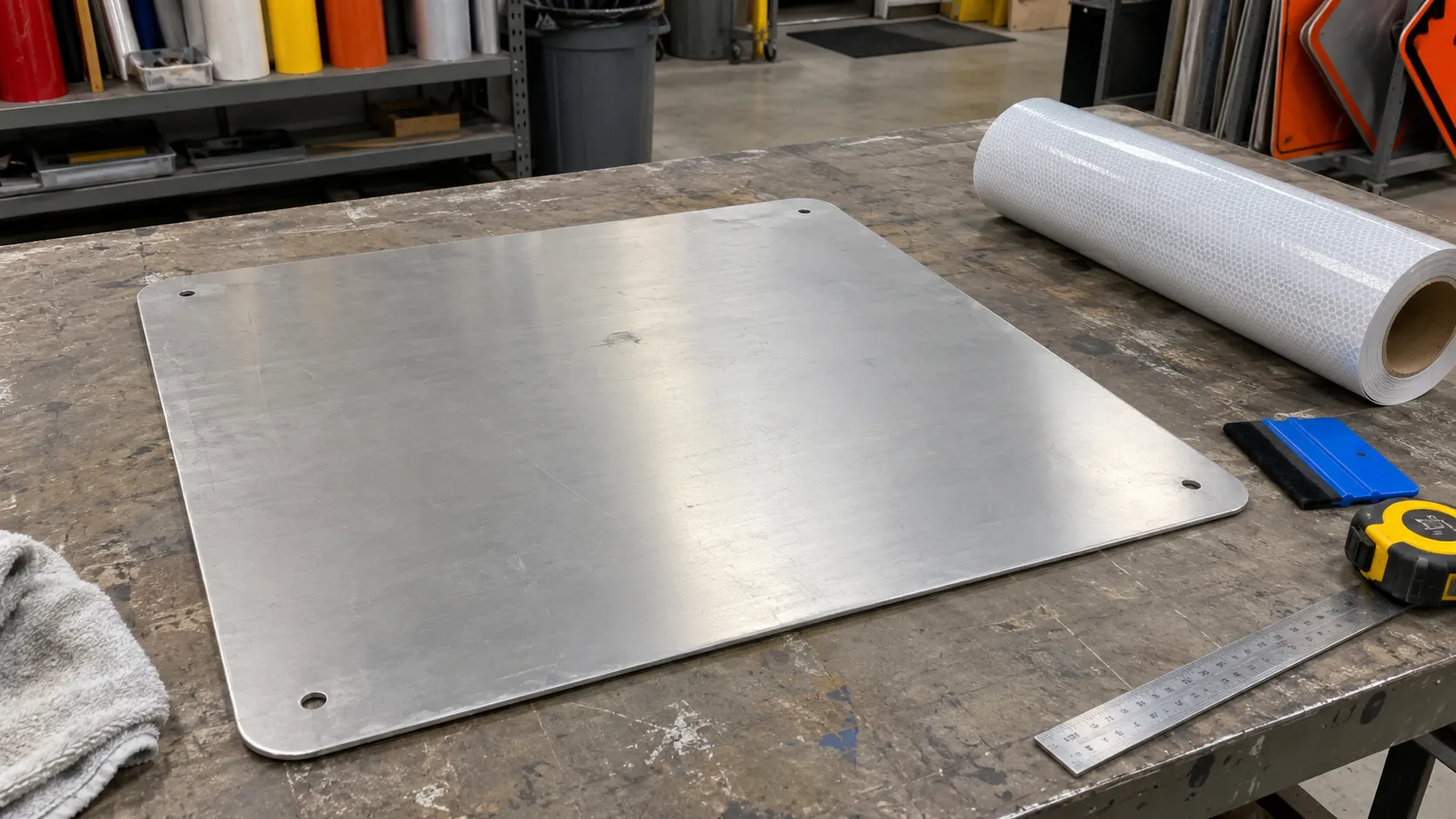
If the aluminum sign panel is still in good condition, it may be reusable.
1. Remove the Old Reflective Sheeting
Remove the existing film according to the material and sign manufacturer's recommended method.
Old adhesive may remain on the aluminum.
2. Remove Adhesive Residue
The final panel should not have loose adhesive, dirt, oil or old film remaining on the application surface.
Use a cleaning method compatible with the aluminum panel.
3. Inspect the Aluminum
Check for:
Corrosion
Deep scratches
Bent areas
Sharp edges
Old adhesive
Surface oxidation
Damaged holes or corners
A badly damaged panel may not be worth reusing.
4. Prepare the Panel Again
The aluminum should be:
before applying the new reflective sheeting.
5. Apply the New Film
Apply the new reflective sheeting using the recommended temperature, pressure and orientation for that product.
Your existing panel preparation process should be treated the same way as preparing a new sign blank.
Can You Reuse the Aluminum Sign Panel?
Often, yes.
The reflective sheeting and the aluminum panel do not necessarily have the same service life.
If the aluminum remains:
Flat
Structurally sound
Free from serious corrosion
Cleanable
Suitable for the new adhesive system
it may be reused after the old film and adhesive have been removed.
Reusing a good aluminum panel can reduce material waste and refurbishment cost.
But the decision should be based on the panel condition, not simply its age.
Quick Inspection Before Reusing an Old Sign
Before applying new reflective sheeting, ask:
Is the old film lifting at the edges?
Is the surface cracked or heavily scratched?
Is old ink still present?
Is there adhesive residue?
Is the aluminum corroded?
Is the panel still flat?
Can the surface be cleaned properly?
Is the new reflective sheeting approved for this substrate?
If several of these points are uncertain, do a small adhesion test before full production.
FAQ
Can I stick reflective vinyl over reflective vinyl?
Sometimes specific graphic or overlay systems are designed for this purpose, but applying a complete new reflective film over old weathered sheeting should not be treated as a normal refurbishment method.
Check the technical instructions for the exact product combination.
Do I need to remove all old adhesive?
The application surface should be clean, stable and prepared according to the new reflective sheeting manufacturer's instructions.
Loose or contaminated adhesive residue can interfere with the new bond.
Can an old aluminum traffic sign be reused?
Yes, if the aluminum is still flat, structurally sound and suitable for proper surface preparation.
Remove the old film, inspect the panel and prepare the aluminum before applying new reflective sheeting.
Final Thoughts
Putting new reflective sheeting directly over an old sign may look like an easy way to save time.
But the new film is only as stable as the surface underneath it.
For most sign refurbishment work, a safer process is:
remove the old film → inspect and clean the aluminum → apply the new reflective sheeting
Special overlays and approved graphic systems are exceptions and should follow their own manufacturer instructions.
RELATED NEWS

Sun, Sand and a 50°C Container: Getting Reflective Sheeting Through a Hot Climate
In hot regions, reflective sheeting can start ageing before it reaches the sign shop. UV, heat, dust and humidity each attack a different part of the product, and each needs its own defence.Picture a distributor in a hot coastal city who receives a container of prismatic sheeting in midsummer. It si
