



Reflective sheeting can remain in a warehouse for weeks or months before printing, cutting or application. During this period, poor storage can affect the roll even before it reaches production.
Heat, moisture, direct sunlight, dust and incorrect roll positioning may cause problems such as curling, liner deformation, surface marks, weak adhesive performance or difficult printing.
For this reason, reflective sheeting should be stored in a clean, dry and controlled indoor environment. Rolls should remain properly supported and protected until they are ready for use.
This guide explains how distributors, sign manufacturers and reflective material users can store reflective sheeting correctly and reduce unnecessary material loss.
Why Does Reflective Sheeting Storage Matter?
Reflective sheeting is not only a surface film.
A typical pressure-sensitive reflective material may contain:
A surface film
A reflective optical layer
Adhesive
Release liner
Additional coating or structural layers
These layers can react differently to temperature, humidity and pressure.
Poor storage may not immediately make a roll look damaged. Problems often become visible later during printing, cutting or application.
Common examples include:
Roll curling
Wrinkled release liner
Edge lifting
Adhesive transfer
Surface contamination
Printing problems
Uneven feeding through equipment
Permanent pressure marks
Difficult liner removal
Changes in roll shape
Correct storage helps keep the material stable before production.
1. Keep Reflective Sheeting in a Cool, Dry Indoor Area
Reflective sheeting should normally be stored indoors in a clean and dry warehouse.
Avoid areas close to:
Windows with strong sunlight
Heating equipment
Hot roofs
Boilers
Outdoor loading areas
Wet floors
Water pipes
High-humidity walls
A warehouse that becomes very hot during the day and cool at night may expose materials to repeated temperature changes.
High humidity can also affect cartons, paper liners and some adhesive systems.
The exact storage temperature and humidity depend on the specific reflective sheeting product. Buyers should always check the technical data sheet provided for the material.
Do not assume every reflective sheeting grade has exactly the same storage requirements.
2. Keep Rolls Away From Direct Sunlight
Do not leave reflective sheeting rolls in direct sunlight.
This includes rolls stored:
Near warehouse windows
Outside before loading
Inside vehicles for long periods
Near transparent warehouse roofs
Sunlight can quickly increase the temperature of the roll.
The outside layers may become much hotter than the surrounding air, especially when the roll is covered with dark packaging.
Long exposure to heat can affect the face film, adhesive and liner.
Keep unopened rolls inside their original cartons whenever possible.
3. Store Rolls Horizontally With Proper Support
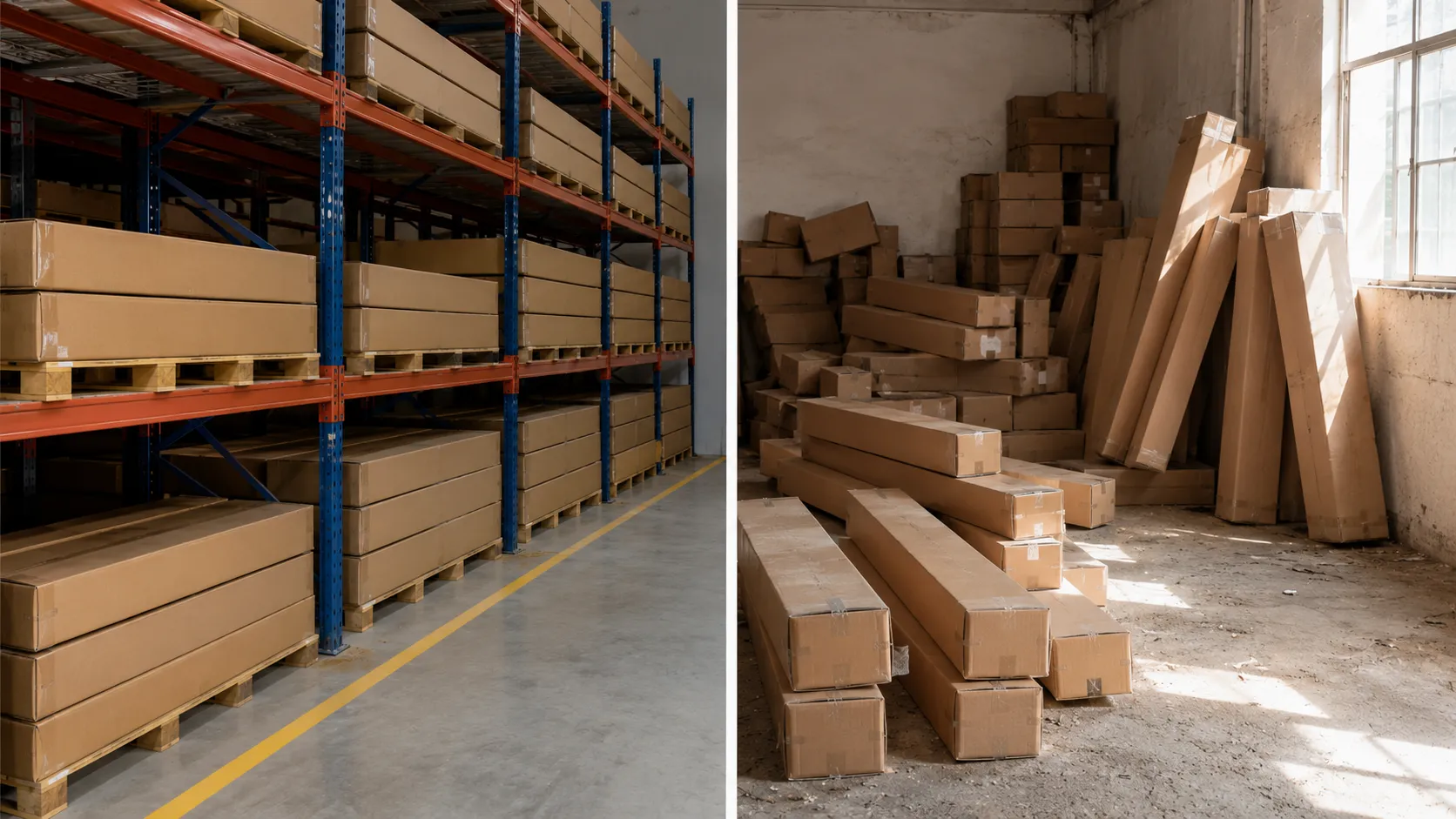
Large reflective sheeting rolls should not simply be placed anywhere on the warehouse floor.
The roll needs proper support.
A common method is to keep the roll horizontally inside its original shipping carton with the original support system.
Partially used rolls can also be supported through the core when the product supplier recommends this method.
Incorrect storage may place too much pressure on one area of the roll.
This can cause:
Flat spots
Edge damage
Telescoping
Surface pressure marks
Roll deformation
Never place heavy cartons or equipment on top of reflective sheeting rolls.
4. Keep Partially Used Rolls Tightly Wound
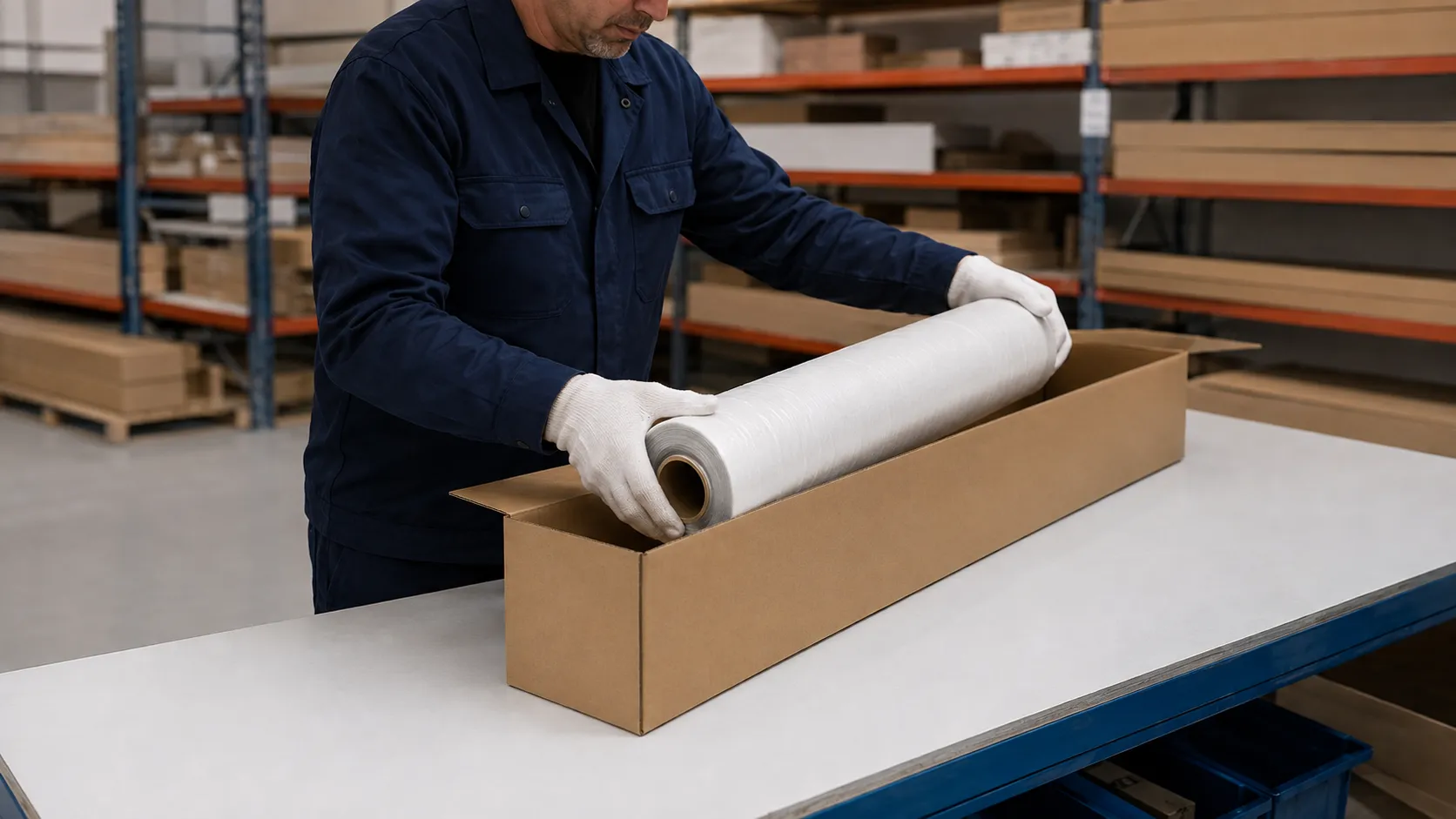
A partially used roll needs more care than a sealed new roll.
After cutting material from the roll:
Keep the remaining material evenly wound.
Avoid loose layers.
Protect the exposed edge.
Return the roll to suitable packaging.
Keep the product identification with the roll.
A loosely wound roll can shift during handling.
This may create wrinkles, edge damage or uneven tension.
Do not throw a partially used roll into an open storage rack without protection.
5. Keep the Original Packaging
The original carton is not only for transportation.
It also helps protect the reflective sheeting from:
Dust
Light
Physical damage
Accidental scratches
Edge impact
Warehouse contamination
If a roll is opened but not completely used, returning it to its packaging is normally better than leaving it exposed.
The label on the carton can also contain useful information such as:
Product name
Grade
Color
Roll size
Batch number
Production information
Keeping this information is especially important for distributors and manufacturers that manage several reflective sheeting grades.
6. Protect Reflective Sheeting From Moisture
Water and high humidity can create several problems during storage.
Paper release liners may absorb moisture and change shape.
Cartons may also become soft or damaged.
Depending on the material construction, moisture can contribute to:
Liner curling
Wrinkles
Poor feeding
Surface marks
Adhesive problems
Difficult processing
Never store reflective sheeting directly on a wet warehouse floor.
Pallets or suitable warehouse racks can help keep cartons away from floor moisture.
If a carton becomes wet during transportation, inspect the material before sending it into production.
7. Avoid Dust and Surface Contamination
A reflective surface should remain clean before printing or application.
Dust, oil and other contamination can affect:
Ink adhesion
Lamination
Graphic appearance
Adhesive bonding
Surface quality
This is especially important for printable reflective sheeting.
Do not open rolls in dirty production areas before they are needed.
Workers should also avoid touching the printable surface more than necessary.
Clean handling reduces problems later in production.
8. Let Cold or Hot Rolls Adjust Before Processing
Reflective sheeting may arrive from a hot container, cold truck or warehouse with a different temperature from the production room.
Do not immediately open and process a roll when there is a large temperature difference.
Allow the material to adjust to the production environment first.
This is especially important before:
UV printing
Solvent printing
Screen printing
Plotter cutting
Lamination
Application to aluminum panels
Sudden temperature changes can contribute to condensation and material movement.
A stable material is easier to print, cut and apply.
9. Store Cut Sheets Flat
Some sign manufacturers convert reflective rolls into sheets before printing or application.
Cut sheets should normally be stored flat.
Avoid:
Folding
Rolling small sheets too tightly
Heavy uneven pressure
Bent corners
Dirty work surfaces
Use clean separators when necessary to protect the reflective surface.
For printed sheets, make sure the ink or coating has completed the required drying or curing process before stacking.
Otherwise, one sheet may mark or transfer onto another.
10. Use FIFO for Warehouse Management

FIFO means:
First In, First Out.
Older stock should normally be used before newer stock when both products are the same specification and remain within the supplier's recommended shelf life.
For every roll, record:
Information | Why It Matters |
|---|---|
Product grade | Prevents mixing different materials |
Color | Helps stock control |
Roll size | Helps production planning |
Batch number | Supports traceability |
Arrival date | Helps stock rotation |
Supplier | Useful when comparing batches |
Remaining quantity | Reduces unnecessary new roll opening |
Good warehouse control is especially useful for distributors that keep many colors and grades in stock.
11. Do Not Confuse Shelf Life With Outdoor Durability
This is an important point for buyers.
Shelf life and outdoor durability are not the same thing.
Shelf life refers to how long unused material can remain in storage under the recommended conditions before application.
Outdoor durability refers to expected performance after the material has been properly applied and exposed outdoors.
For example, a reflective sheeting product may be designed for several years of outdoor use, but this does not mean an unopened roll should automatically be stored for the same number of years.
Always check the supplier's information for the exact product.
12. What Should You Check Before Using an Old Roll?
Before using reflective sheeting that has been stored for a long time, inspect it first.
Check the roll for:
Surface scratches
Yellowing
Wrinkles
Edge damage
Liner deformation
Adhesive transfer
Unusual smell
Loose layers
Roll deformation
Then cut a small sample.
Test the material using the same process planned for production.
Depending on the application, this may include:
Adhesion test
Printing test
Cutting test
Liner release test
Lamination test
Retroreflectivity check
A small test is much cheaper than discovering a problem after a complete production batch has been made.
Storage Problems and Possible Causes
Problem | Possible Storage Cause | What to Check |
Roll edges are damaged | Poor handling or unsupported storage | Carton and roll position |
Release liner curls | Moisture or temperature change | Warehouse humidity and packaging |
Roll has flat areas | Incorrect support or heavy pressure | Storage position |
Material is difficult to print | Dust, contamination or unstable temperature | Surface and conditioning |
Adhesive behaves differently | Long storage or unsuitable conditions | Shelf life and sample adhesion |
Layers become loose | Roll not tightly wound | Remaining roll handling |
Material wrinkles during feeding | Liner distortion or roll deformation | Storage and machine setup |
A production problem should not automatically be blamed on the reflective film itself.
Storage history should also be checked.
Reflective Sheeting Warehouse Checklist
Before storing a new shipment, check the following:
Is the warehouse clean and dry?
Are the cartons protected from direct sunlight?
Are rolls properly supported?
Are cartons kept away from wet floors?
Is each batch clearly identified?
Are opened rolls protected after use?
Are older rolls used before newer stock?
Is the material allowed to adjust before processing?
Are damaged cartons inspected?
Are sample tests performed when storage history is uncertain?
This simple checklist can prevent many avoidable production problems.
Which Reflective Sheeting Needs the Most Care?
All pressure-sensitive reflective sheeting should be stored correctly.
However, storage becomes especially important when the material will later be used for:
Digital printing
Large-format graphics
Plotter cutting
License plate production
Long-term outdoor applications
Printing and precision converting processes can quickly show small changes in liner flatness, surface cleanliness or material stability.
Buyers should therefore consider storage requirements before placing a large order, not only after the goods arrive.
What Should Buyers Ask the Supplier Before Ordering?
Before buying reflective sheeting in bulk, ask:
What are the recommended storage conditions?
What is the shelf life of this exact product?
Should the roll remain in its original carton?
How should partially used rolls be stored?
Does the material need conditioning before printing?
Is there a special requirement for hot or humid climates?
How can the batch number be identified?
What tests are recommended before using older stock?
The answers should relate to the exact reflective sheeting you are buying.
Different face films, adhesives, release liners and reflective structures may require different handling.
FAQ
Can reflective sheeting be stored outdoors?
It is generally better to store reflective sheeting indoors in a clean and dry environment. Outdoor storage exposes the material to sunlight, rain, heat, humidity and larger temperature changes.
Can reflective sheeting rolls be stored vertically?
Storage instructions can vary by product. Large reflective sheeting rolls are commonly stored horizontally with proper support. Follow the technical instructions for the exact product.
What happens if reflective sheeting gets too hot?
Excessive heat may affect the film, adhesive, release liner or roll shape. The exact effect depends on the material construction and length of exposure.
Can I use a reflective sheeting roll that has been stored for a long time?
Check the product shelf life and inspect the material before use. Test a small sample for adhesion, printing, cutting and other required processes before starting bulk production.
Why does reflective sheeting curl after opening?
Curling can be related to material construction, liner tension, temperature, humidity, storage history or how the roll was wound. Check both the material and storage conditions before deciding the cause.
Should opened reflective sheeting be returned to the carton?
Keeping partially used rolls protected and properly wound helps reduce dust, physical damage and deformation. Follow the supplier's storage instructions for the exact product.
Final Thoughts
Correct reflective sheeting storage is a small part of the production process, but it can have a large effect on material performance.
Keep rolls clean, dry, protected from direct sunlight and correctly supported. Protect partially used rolls, maintain batch records and test material when its storage history is uncertain.
Most importantly, follow the technical data for the exact reflective sheeting you purchase rather than applying one storage rule to every product.
If you are purchasing reflective sheeting for advertising signs, traffic signs, printing or other applications, send us your required grade, color, roll size, quantity, printing method and application. Our team can help you select a suitable material and provide samples for testing.
RELATED NEWS

Sun, Sand and a 50°C Container: Getting Reflective Sheeting Through a Hot Climate
In hot regions, reflective sheeting can start ageing before it reaches the sign shop. UV, heat, dust and humidity each attack a different part of the product, and each needs its own defence.Picture a distributor in a hot coastal city who receives a container of prismatic sheeting in midsummer. It si
