


Choosing reflective sheeting is not simply about finding the brightest product.
For sign manufacturers, distributors, contractors, and material buyers, one common question is:
Should I choose Engineering Grade or High Intensity Prismatic (HIP) reflective sheeting?
The short answer is:
Engineering Grade is generally a more economical choice for general signage and moderate visibility requirements, while HIP is better suited to applications that require stronger nighttime visibility and higher retroreflective performance.
However, the right choice depends on more than brightness.
You should also consider:
Application
Viewing distance
Traffic environment
Outdoor durability
Substrate
Printing requirements
Budget
Local project requirements
This guide compares Engineering Grade vs HIP reflective sheeting to help you choose the right material for your project.
Quick Comparison: Engineering Grade vs HIP
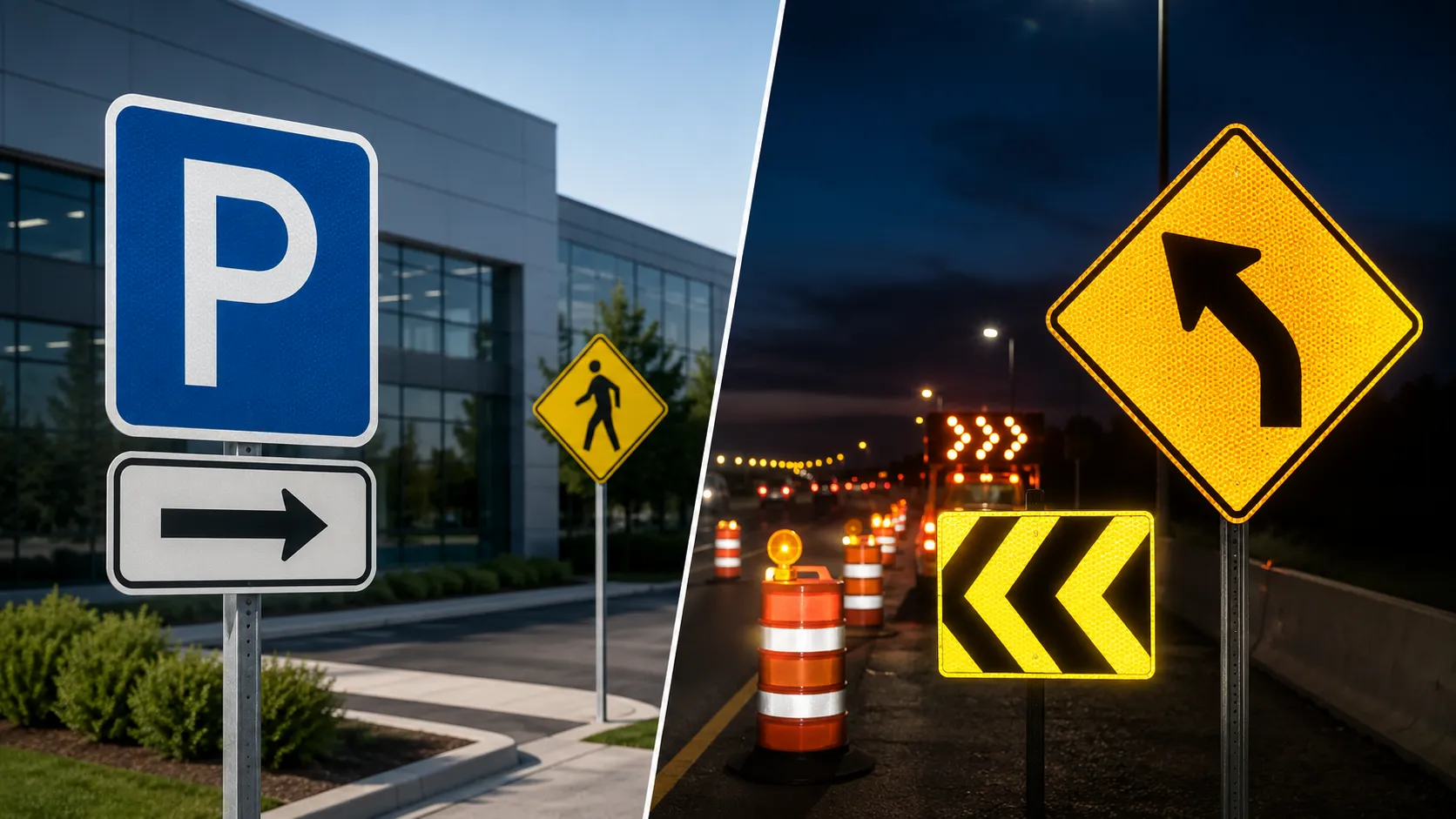
Feature | Engineering Grade | HIP |
|---|---|---|
Performance level | Moderate | Higher |
Typical optical technology | Often glass bead; product-specific | Microprismatic |
Nighttime visibility | Suitable for general applications | Stronger |
Viewing distance | Short to medium | Medium to longer |
Typical applications | Parking, property, commercial and general safety signs | Traffic, construction and road-safety applications |
Processing | Generally easy to cut and apply | Product-specific |
Cost | Lower | Higher |
Best choice when | Cost-effective visibility is enough | Stronger nighttime visibility is required |
Actual performance varies by manufacturer, product construction, color, and test conditions. Always check the technical datasheet of the specific product.
What Is Engineering Grade Reflective Sheeting?
Engineering Grade reflective sheeting is commonly used for general outdoor signage and moderate-performance reflective applications.
It provides better nighttime visibility than ordinary non-reflective vinyl while remaining relatively economical.
Typical applications may include:
Parking signs
Property signs
Factory signs
Directional signs
General safety signs
Commercial signage
Low-demand outdoor signs
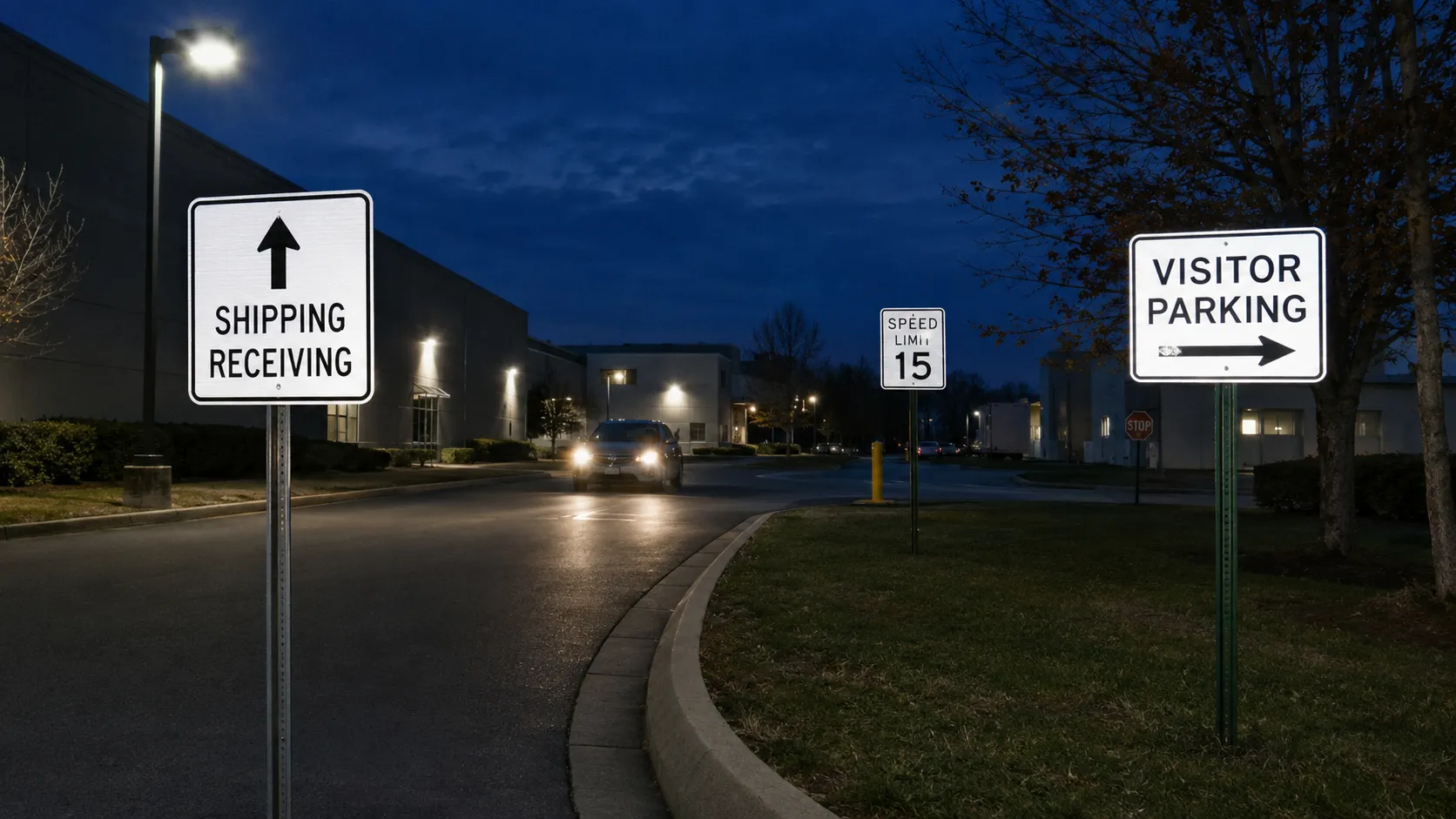
Many traditional Engineering Grade products use glass bead retroreflective technology.
However, Engineering Grade describes a product or performance category rather than one single optical structure. Some engineering-level reflective materials may use prismatic technology.
For this reason, buyers should not assume:
Engineering Grade = glass bead in every case.
Always check the actual product construction.
Why Buyers Choose Engineering Grade
The main advantages are usually:
Lower material cost
Practical nighttime visibility
Good processing flexibility
Suitable for many general signage applications
Wide color availability
Easy integration into common sign-production workflows
For projects that do not require maximum retroreflective performance, Engineering Grade can provide a good balance between cost and function.
What Is HIP Reflective Sheeting?
HIP stands for High Intensity Prismatic.
HIP reflective sheeting uses microscopic prism structures to return incoming light toward its source.
Compared with many traditional Engineering Grade materials, HIP generally provides stronger retroreflective performance.
This makes it useful where nighttime recognition is more important.
Typical applications may include:
Traffic signs
Warning signs
Directional signs
Construction-zone signs
Road-safety equipment
Traffic-control applications
Whether a specific HIP product is suitable for a particular road project still depends on local standards and project specifications.
Why HIP Can Be Brighter
Traditional glass bead materials use microscopic glass spheres to redirect light.
HIP uses precisely formed microprisms.
These optical structures can return incoming light more efficiently, which generally results in stronger nighttime visibility.
This does not mean every HIP product performs the same.
Different HIP products can vary in:
Retroreflectivity
Face-film construction
Adhesive
Outdoor durability
Color performance
Processing characteristics
That is why product names alone should never replace technical data.
Engineering Grade vs HIP: The Main Differences
1. Nighttime Visibility
This is usually the most noticeable difference.
Engineering Grade provides practical visibility for many general applications.
HIP generally appears brighter under vehicle headlights and other directed light sources.
Stronger retroreflection can become more useful when:
Viewing distance increases
Traffic speed increases
Street lighting is limited
Earlier sign recognition is important
The information is safety-related
If the application is a parking sign viewed from a short distance, the additional brightness of HIP may not be necessary.
2. Optical Technology
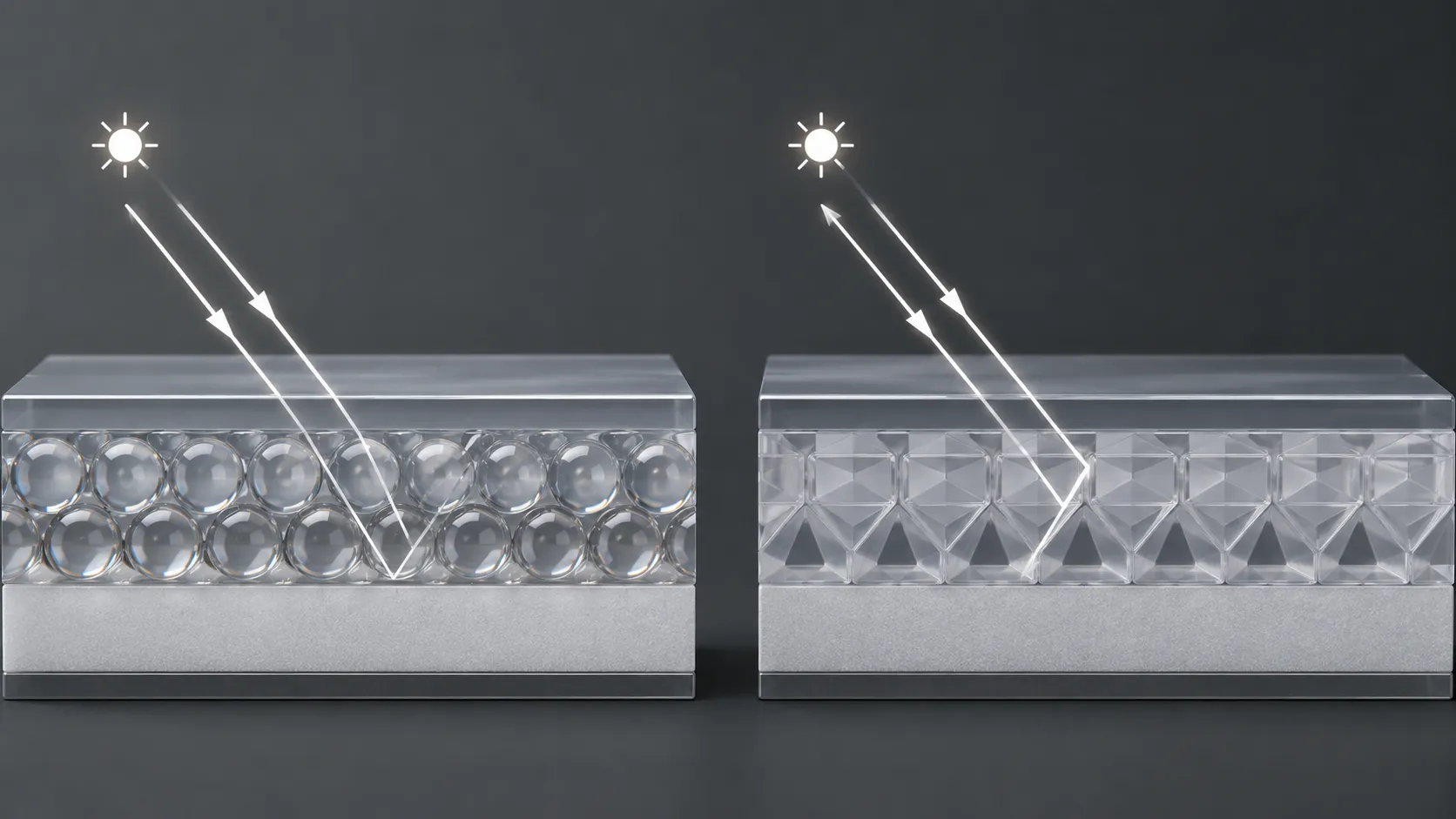
Many traditional Engineering Grade products use glass beads.
HIP uses microprismatic technology.
Glass beads and microprisms both create retroreflection, but they redirect light differently.
Glass bead materials use microscopic transparent spheres.
Microprismatic materials use geometric optical structures.
This difference is one reason HIP generally delivers stronger retroreflective performance.
3. Application
Engineering Grade is often selected for:
Parking areas
Private property
Factories
Warehouses
General safety signage
Commercial signs
Lower-demand outdoor applications
HIP is more commonly considered for:
Traffic-control signage
Warning signs
Construction areas
Road guidance
Applications requiring stronger nighttime recognition
The actual project requirement should always come first.
4. Cost
Engineering Grade is generally less expensive.
HIP usually costs more because of its optical construction and higher performance.
However, the cheapest material is not automatically the most economical choice.
If a lower-performance product cannot meet the required visibility, replacement or project failure may cost far more than the initial material savings.
At the same time, using HIP for a simple commercial sign may mean paying for performance that the project does not need.
The goal is not to buy the cheapest product or the brightest product.
The goal is to buy the correct product.
Which One Is Better for Different Applications?
Parking and Property Signs
Engineering Grade is often a practical choice.
These signs are usually:
Viewed from relatively short distances
Located in lower-speed environments
Used for general information or identification
In these situations, moderate retroreflectivity may be enough.
Commercial and Industrial Safety Signs
Engineering Grade can also work well for:
Factory signs
Warehouse signs
Equipment identification
Property warnings
General safety information
If unusually strong nighttime visibility is required, HIP can also be considered.
Urban Traffic Applications
This depends on the project.
Do not automatically decide based only on the words “urban road.”
Consider:
Traffic speed
Viewing distance
Sign location
Street lighting
Sign size
Local requirements
Some applications may only need moderate performance, while others may require stronger reflective material.
Higher-Demand Road Applications
When drivers need to recognize information earlier or from greater distances, HIP generally becomes more attractive.
The stronger nighttime visibility can provide more useful performance in demanding environments.
However, the final product selection should follow the relevant project requirements rather than a general blog recommendation.
Does HIP Last Longer Than Engineering Grade?
Not automatically.
HIP products are commonly designed for more demanding outdoor applications, but optical technology alone does not determine lifespan.
Outdoor durability also depends on:
Face-film material
UV resistance
Adhesive system
Climate
Humidity
Temperature
Installation
Substrate
Cleaning
Physical damage
Two products labeled “HIP” can have different expected outdoor service lives.
The same applies to Engineering Grade.
Therefore, instead of asking:
“How many years does HIP last?”
Ask:
“What is the outdoor durability of this exact product?”
The supplier should provide the relevant product data.
Is HIP Worth the Higher Price?
It depends on the application.
Imagine you are producing a large order of parking signs.
If Engineering Grade already provides sufficient visibility and durability, using HIP may increase cost without providing much practical benefit.
Now imagine a warning sign that must be recognized earlier at night.
In that case, the stronger retroreflective performance of HIP may provide real value.
A useful rule is:
Pay for the performance your project needs—not for the highest grade available.
What Should Buyers Compare Before Ordering?
Choosing between EG and HIP should involve more than comparing quotations.
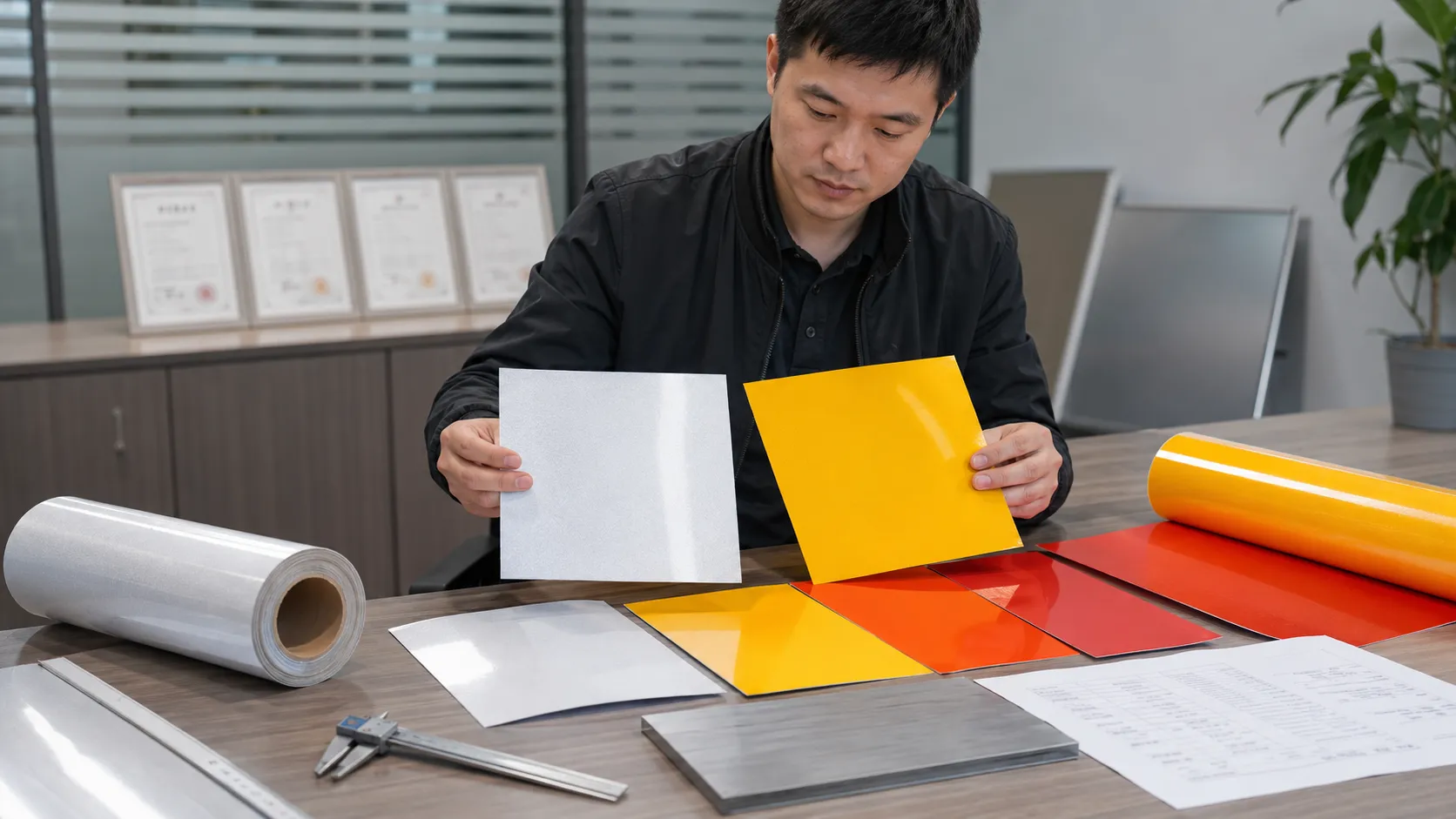
1. Application
Tell the supplier exactly where the material will be used.
For example:
Parking sign
Commercial sign
Traffic sign
Construction sign
Factory safety sign
Directional sign
Application is the starting point for correct product selection.
2. Retroreflective Performance
Request actual technical information.
Do not rely only on statements such as:
Very bright
Super reflective
High grade
Premium quality
If retroreflectivity values are provided, check the test conditions as well.
3. Material Construction
Ask about the face material.
Depending on the product, reflective films may use:
PET
Acrylic
PVC
Other constructions
Different materials can affect flexibility, processing, and application.
4. Adhesive and Substrate
Reflective performance means little if the film cannot remain attached properly.
Tell the supplier whether the material will be applied to:
Aluminum
Painted metal
Plastic
Rigid panels
Other substrates
Confirm compatibility before placing a bulk order.
5. Printing and Cutting
If you manufacture printed signs, ask whether the product is suitable for your production method.
Possible processes include:
Screen printing
UV printing
Digital printing
Plotter cutting
Lamination
Do not assume every reflective film works with every printing system.
6. Outdoor Durability
Ask for the expected service life of the exact product.
Do not judge durability only by whether the material is called Engineering Grade or HIP.
7. Samples
Sample testing is highly recommended before large orders.
You can evaluate:
Surface appearance
Color
Reflectivity
Adhesion
Cutting
Printing
Application
Release liner
A small sample test can prevent a much larger purchasing mistake.
Common Buying Mistakes
Choosing Only by Price
Low price can be attractive, but it should come after confirming the required performance.
Choosing Only by Brightness
Higher brightness is useful only when the application actually needs it.
Assuming All Engineering Grade Products Are Identical
They are not.
Different manufacturers can use different optical structures, face materials, adhesives, and liners.
Assuming All HIP Products Are Identical
HIP describes a prismatic product category, but performance can still vary significantly between products.
Ignoring the Substrate
A reflective film that works well on flat aluminum may behave differently on plastic or another surface.
Skipping Sample Testing
For distributors, OEM customers, and bulk buyers, this is one of the easiest mistakes to avoid.
Simple Decision Guide
Choose Engineering Grade If:
Moderate nighttime visibility is enough
Budget is important
Signs are viewed from shorter distances
The application is general signage
The environment is not highly demanding
The project does not require stronger traffic-grade performance
Choose HIP If:
Stronger nighttime visibility is required
Signs need to be recognized from farther away
The application is more safety-sensitive
Road or traffic visibility is important
The project requires higher retroreflective performance
If you are unsure, provide your application details to the supplier instead of selecting from the product name alone.
FAQ: Engineering Grade vs HIP Reflective Sheeting
Is HIP Brighter Than Engineering Grade?
Generally, yes.
HIP uses microprismatic technology and is normally designed to provide stronger retroreflective performance than standard Engineering Grade products.
Is Engineering Grade Suitable for Outdoor Use?
Yes.
Many Engineering Grade reflective films are designed for outdoor signage. Actual durability depends on the specific product and environment.
Is Engineering Grade Always Glass Bead?
No.
Traditional Engineering Grade products commonly use glass beads, but prismatic engineering-level products also exist.
Always check the technical datasheet.
Is HIP Microprismatic?
Yes.
HIP means High Intensity Prismatic, and microprismatic optical technology is a key feature of this product category.
Can Engineering Grade Be Used for Traffic Signs?
It may be suitable for some applications, depending on local regulations, traffic conditions, project requirements, and the specific product.
Do not choose solely from the grade name.
Do I Need HIP for Every Traffic Sign?
No.
Different signs require different levels of performance.
Traffic speed, viewing distance, sign location, lighting conditions, and local specifications should all be considered.
Which Is Cheaper: Engineering Grade or HIP?
Engineering Grade is generally cheaper.
However, the best value depends on whether the material can meet the full performance requirements of the project.
Bottom Line
Engineering Grade and HIP reflective sheeting are designed for different needs.
Engineering Grade reflective sheeting is generally a practical and cost-effective choice for commercial signs, parking signs, property signs, industrial safety, and other moderate-performance applications.
HIP reflective sheeting is more suitable when stronger nighttime visibility and higher retroreflective performance are required.
Instead of asking:
“Which one is better?”
Ask:
“Which one gives my project the performance it actually needs?”
A good selection process is:
Application → Required Visibility → Material Construction → Durability → Sample Testing → Cost
That approach helps avoid both overpaying for unnecessary performance and choosing a product that cannot meet the application's requirements.
Need Help Choosing Engineering Grade or HIP Reflective Sheeting?
ABLAZE supplies both Engineering Grade reflective sheeting and High Intensity Prismatic reflective sheeting for different signage and visibility applications.
When requesting a recommendation or quotation, provide:
Application
Color
Roll size
Quantity
Substrate
Printing method
Expected outdoor life
Required reflective performance
This information helps us recommend a suitable product and provide samples for evaluation before bulk purchasing.
RELATED NEWS

Sun, Sand and a 50°C Container: Getting Reflective Sheeting Through a Hot Climate
In hot regions, reflective sheeting can start ageing before it reaches the sign shop. UV, heat, dust and humidity each attack a different part of the product, and each needs its own defence.Picture a distributor in a hot coastal city who receives a container of prismatic sheeting in midsummer. It si
