


Reflective tape is made for outdoor visibility, but it does not last forever.
So, how long does reflective tape last outdoors?
Depending on the product, application, climate, and installation quality, outdoor reflective materials may last from several years to around 10 years or more.
The most important point is that there is no single lifespan for every reflective tape. Advertising-grade, Engineering Grade, HIP, and high-performance microprismatic materials are designed for different applications and service requirements.
This guide explains typical outdoor durability, what causes reflective tape to fail, and when replacement becomes necessary.
Outdoor Lifespan by Reflective Tape Type
Here is a simple reference:
Reflective Tape Type | Typical Outdoor Durability* | Common Applications |
|---|---|---|
Advertising / Commercial Grade | Short- to medium-term | Advertising, stickers, commercial signs |
Engineering Grade | Around 5–7 years | Parking, property and general safety signs |
High Intensity Prismatic (HIP) | Up to around 10 years | Traffic signs, construction and road safety |
High-Performance Microprismatic | Up to around 10–12 years | Highways, guide signs and demanding traffic applications |
Up to around 10 years | Trucks, trailers and commercial vehicles |
*These are general reference ranges. Actual lifespan depends on the specific manufacturer, product construction, installation, climate and application.
Advertising and Commercial Reflective Tape
Advertising-grade reflective tape is normally designed for applications where cost, flexibility, printing and general nighttime visibility are more important than maximum service life.
Typical uses include:
Commercial signs
Reflective stickers
Promotional graphics
Vehicle decoration
Shop signage
For temporary or medium-term applications, this type of material can be more economical than using professional traffic-grade reflective tape.
Engineering Grade Reflective Tape
Engineering Grade, or EG, is commonly used for general outdoor signage.
Typical applications include:
Parking signs
Property signs
Directional signs
Facility signs
General safety signs
Some professional Engineering Grade products are designed for around 5–7 years of outdoor use, depending on the manufacturer and installation conditions.
EG is often a practical choice when buyers need reliable outdoor performance without the higher cost of HIP.
High Intensity Prismatic Reflective Tape
High Intensity Prismatic (HIP) reflective material is designed for more demanding road-safety applications.
Common uses include:
Warning signs
Regulatory signs
Construction signs
Traffic control
Road-safety equipment
High-quality HIP materials can provide outdoor service life of up to around 10 years under specified conditions.
Compared with lower-performance materials, HIP also provides stronger nighttime retroreflectivity.
High-Performance Microprismatic Reflective Tape
High-performance microprismatic materials are used where both long service life and high nighttime visibility are important.
Typical applications include:
High-speed roads
Highway signs
Large directional signs
Critical warning signs
Major road infrastructure
Some premium microprismatic products have published durability or warranties of approximately 10–12 years.
For these applications, buyers should compare actual technical specifications rather than relying only on grade names.
Factors That Affect Reflective Tape Lifespan
Even two rolls of the same reflective tape can age differently outdoors.
Several factors influence real-world durability.
1. UV Exposure
Strong sunlight can gradually cause:
Color fading
Surface aging
Reduced gloss
Adhesive deterioration
Reflective tape used in tropical, desert, or high-UV regions may therefore age faster than material installed in milder environments.
2. Surface Preparation
Poor installation is one of the most common reasons reflective tape fails early.
The substrate should normally be:
Clean
Dry
Smooth
Free from oil, wax and dirt
If tape is applied over contamination, the edges may begin lifting long before the reflective material itself reaches the end of its expected lifespan.
3. Heat, Rain and Humidity
Outdoor tape may experience:
High temperatures
Heavy rain
Humidity
Temperature changes
These conditions can place stress on the face film and adhesive.
For long-term outdoor use, the entire material construction matters—not just the reflective surface.
4. Abrasion and Cleaning
Reflective tape installed on a truck or construction machine experiences more physical wear than tape on a stationary sign.
Common causes of damage include:
Pressure washing
Brushes
Road debris
Scratching
Loading equipment
Chemicals
Aggressive cleaning can also shorten service life.
When to Replace Reflective Tape
Do not judge reflective tape only by age.
A product rated for many years may need earlier replacement if it becomes damaged.
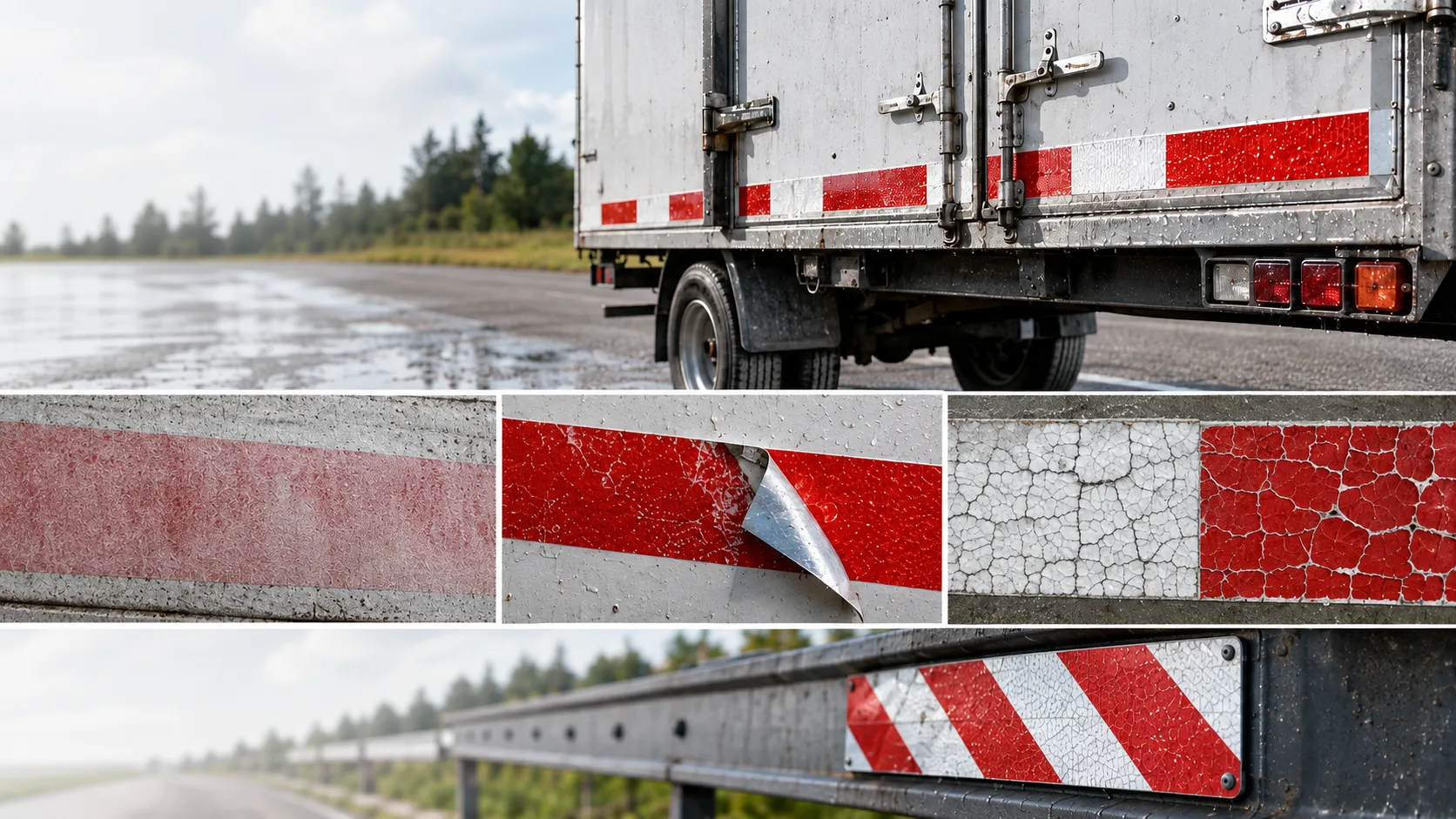
Reduced Nighttime Reflectivity
A tape can still look acceptable during the day but become much less visible at night.
If nighttime brightness has noticeably decreased, especially in a safety application, inspection or replacement should be considered.
Peeling or Edge Lifting
Replace or repair material when you notice:
Lifted corners
Loose edges
Large bubbles
Loss of adhesion
Once moisture and dirt reach the adhesive, failure can spread quickly.
Cracking or Delamination
Cracking, layer separation or severe surface damage indicates that the material is no longer in good condition.
Severe Fading
Strong color fading may affect both appearance and functional visibility.
Physical Damage
Tape that has been torn, scraped, cut or damaged in an accident should be replaced even if it is relatively new.
How to Make Reflective Tape Last Longer
A few simple steps can improve outdoor service life:
Clean and dry the substrate before application.
Use the correct tape for the surface and application.
Install within the recommended temperature range.
Avoid unnecessary stress around edges and seams.
Clean the surface gently.
Inspect reflective tape regularly for peeling or damage.
Good installation cannot turn a short-term product into a 10-year product, but poor installation can easily shorten the life of a high-quality tape.
How to Choose Reflective Tape by Lifespan
The longest-lasting tape is not always the best choice.
Commercial and Short-Term Use
Choose advertising or commercial reflective tape when the project does not require long-term traffic-grade performance.
General Outdoor Signage
Engineering Grade can offer a useful balance between cost and outdoor durability for parking, property and general safety signs.
Road-Safety Applications
HIP is more suitable when stronger nighttime visibility and longer outdoor performance are required.
Long-Term Highway Applications
Higher-performance microprismatic materials are generally better suited to demanding traffic-sign projects where long service life and high retroreflectivity are both important.
The better question is not:
“Which reflective tape lasts the longest?”
It is:
“Which reflective tape will meet my required performance for the full life of the project?”
FAQ: Reflective Tape Outdoor Lifespan
Can Reflective Tape Last 10 Years Outdoors?
Yes. Some professional HIP and vehicle conspicuity products are designed for approximately 10 years of outdoor service under specified conditions.
Can Reflective Tape Last More Than 10 Years?
Some premium microprismatic traffic-sign materials can have published service periods or warranties approaching 12 years.
Does Reflective Tape Lose Reflectivity Over Time?
Yes. UV exposure, dirt, abrasion and material aging can gradually reduce retroreflective performance.
Does Glass Bead Reflective Tape Always Last Less Than Microprismatic Tape?
No.
Optical technology and outdoor durability are different characteristics. Always compare the specifications of the actual products.
Does Rain Damage Reflective Tape?
Outdoor-rated reflective tape is designed to withstand normal rain. Problems are more likely when moisture reaches poorly bonded edges or damaged areas.
Should Reflective Tape Be Replaced if It Still Sticks?
Yes, if the tape has lost significant reflectivity, color or surface integrity. Adhesion alone does not determine whether reflective tape is still performing properly.
Bottom Line
So, how long does reflective tape last outdoors?
A practical reference is:
Commercial Grade → shorter-term use
Engineering Grade → around 5–7 years
HIP → up to around 10 years
High-performance microprismatic → up to around 10–12 years
But actual lifespan depends on:
Product Type → Climate → Surface Preparation → Installation → Cleaning → Physical Wear
The best approach is to choose reflective tape according to the required application and expected service life, rather than simply selecting the cheapest or longest-lasting product.
Looking for Outdoor Reflective Tape?
Changzhou Zhenghe New Material Technology Co., Ltd. supplies reflective materials for commercial signage, general safety marking, traffic signs and transportation applications.
Available products include:
Advertising-grade reflective materials
Engineering Grade reflective materials
High Intensity Prismatic reflective materials
Reflective safety marking films
For product selection, provide your application, required lifespan, reflective grade, color, roll size and quantity so the appropriate material can be matched to your project.
RELATED NEWS

Printable Reflective Sheeting for Digital Printing: Complete Buying Guide
Introduction: Why Printable Reflective Sheeting Is Growing in DemandThe signage and graphics industry is changing quickly.Customers no longer want simple reflective signs with limited designs. They want high-visibility graphics, customized road signs, branded vehicle markings, and colorful safety so

PET vs PVC vs Acrylic Reflective Sheeting: Printing Guide
PET vs PVC vs Acrylic Reflective Sheeting: Which Material Is Right for Your Printing and Signage Project?Choosing between PET, PVC, and acrylic reflective sheeting is not simply a question of which material is “best.” Each material behaves differently during printing, cutting, installation, and outd