


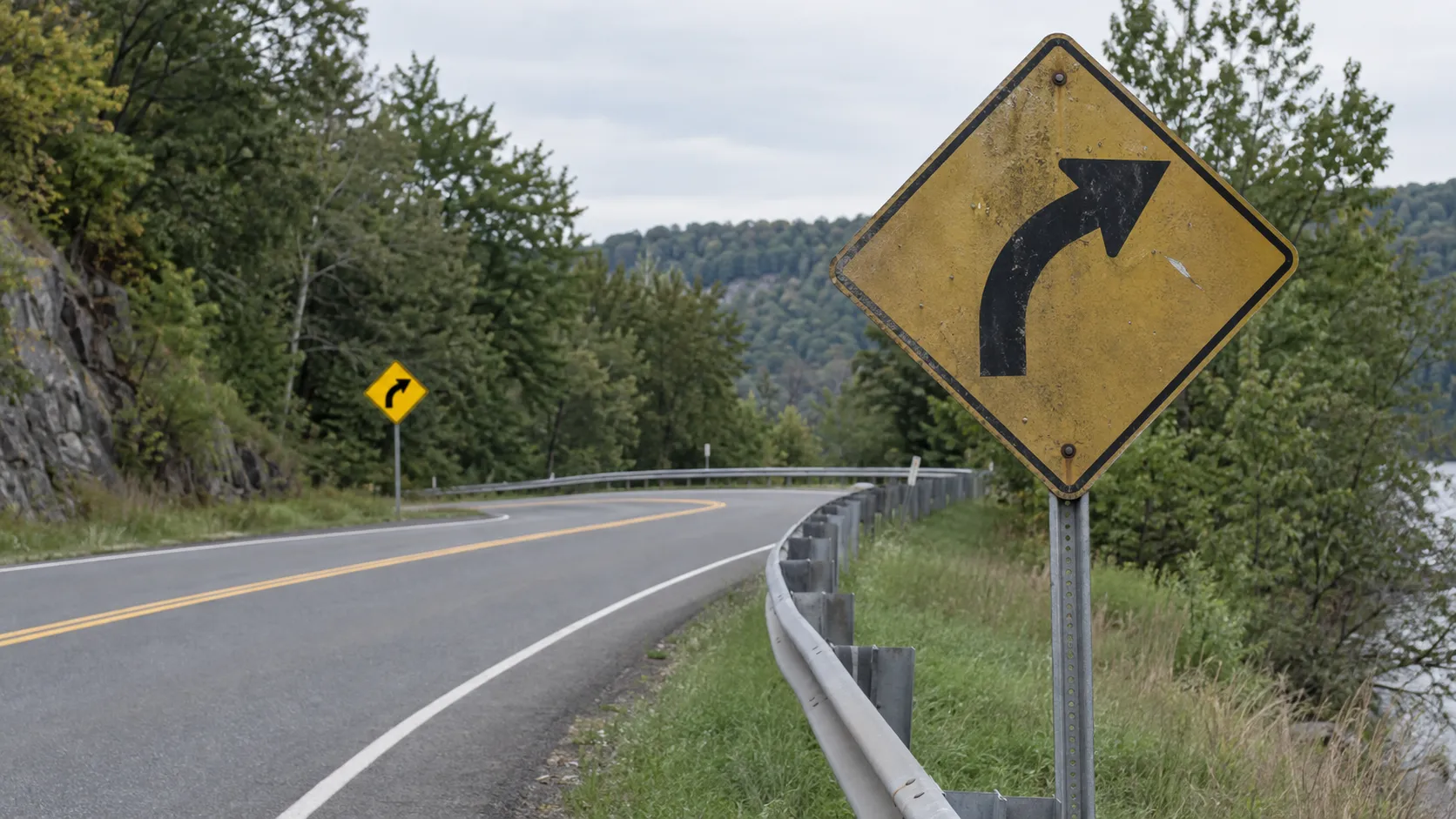
A reflective traffic sign should not be replaced only because it has been outdoors for a certain number of years.
Some signs remain clearly visible and structurally sound for a long time. Others can lose useful performance earlier because of sunlight, dirt, damage, poor fabrication or harsh environmental conditions.
The practical question is:
Can drivers still see and understand the sign clearly, especially at night?
If the answer becomes uncertain, the sign should be inspected more closely.
In the United States, the current MUTCD requires public agencies to use an assessment or management method designed to maintain applicable traffic-sign retroreflectivity at or above established minimum levels. This does not mean every sign must be measured individually; recognized approaches include nighttime inspection, measured retroreflectivity and managed replacement programs.
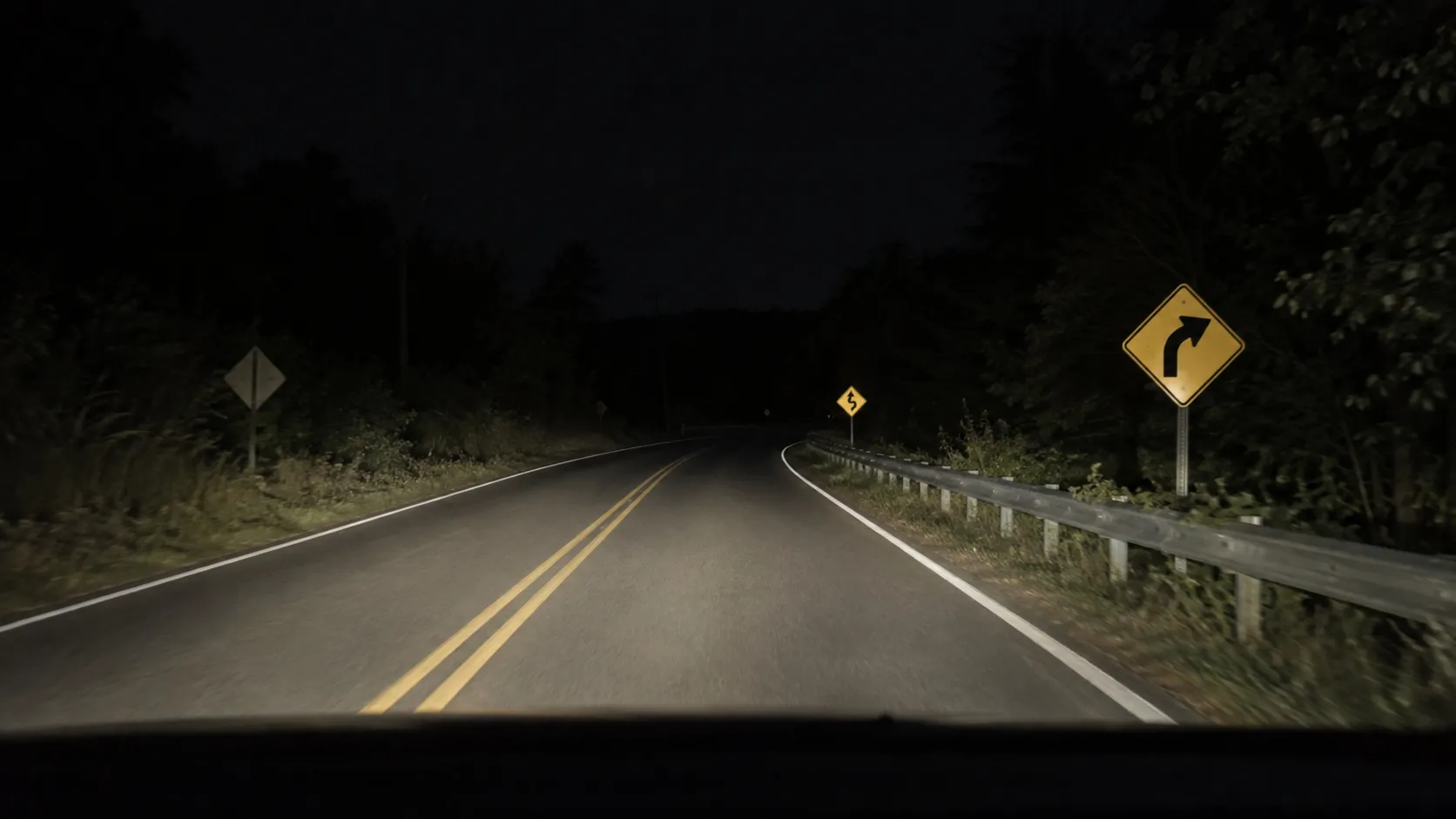
1. The Sign Looks Too Dim at Night
This is one of the most obvious warning signs.
A reflective sign should return enough headlight illumination for the driver to recognize its shape, color and message.
If one sign looks much weaker than similar nearby signs, check it again.
Before replacing it, first rule out simple causes such as:
Dirt or mud
Vegetation blocking the sign
Incorrect sign angle
Water or road spray
Temporary contamination
A dirty sign may improve significantly after proper cleaning.
If the sign remains weak after it is clean and dry, the reflective sheeting may need further evaluation.
2. Measured Retroreflectivity Is Below the Required Level
Visual inspection is useful, but some projects require an objective measurement.
A retroreflectometer measures the coefficient of retroreflection, normally expressed as RA.
Where a governing standard or project specification defines a minimum maintained value, a sign that measures below the applicable requirement is a clear candidate for replacement or corrective action.
FHWA identifies measured retroreflectivity as one method for deciding whether an installed sign remains adequate.
Do not compare every sign with one universal RA number. Requirements depend on factors such as sign type, color and the applicable national or project standard.
3. The Color Has Faded Too Much
Retroreflectivity is not the only performance issue.
A sign may still reflect light but have poor daytime or nighttime color.
Common warning signs include:
Red becoming pale or orange-looking
Yellow losing saturation
Printed legends becoming difficult to distinguish
Background and symbol contrast becoming weak
Color is important because drivers identify many signs partly by their familiar appearance.
FHWA notes that fading can reduce sign contrast, detectability and legibility, particularly on important regulatory signs.
If the color no longer meets the required specification or the sign becomes difficult to recognize, replacement may be necessary even if some retroreflection remains.
4. The Reflective Surface Is Physically Damaged
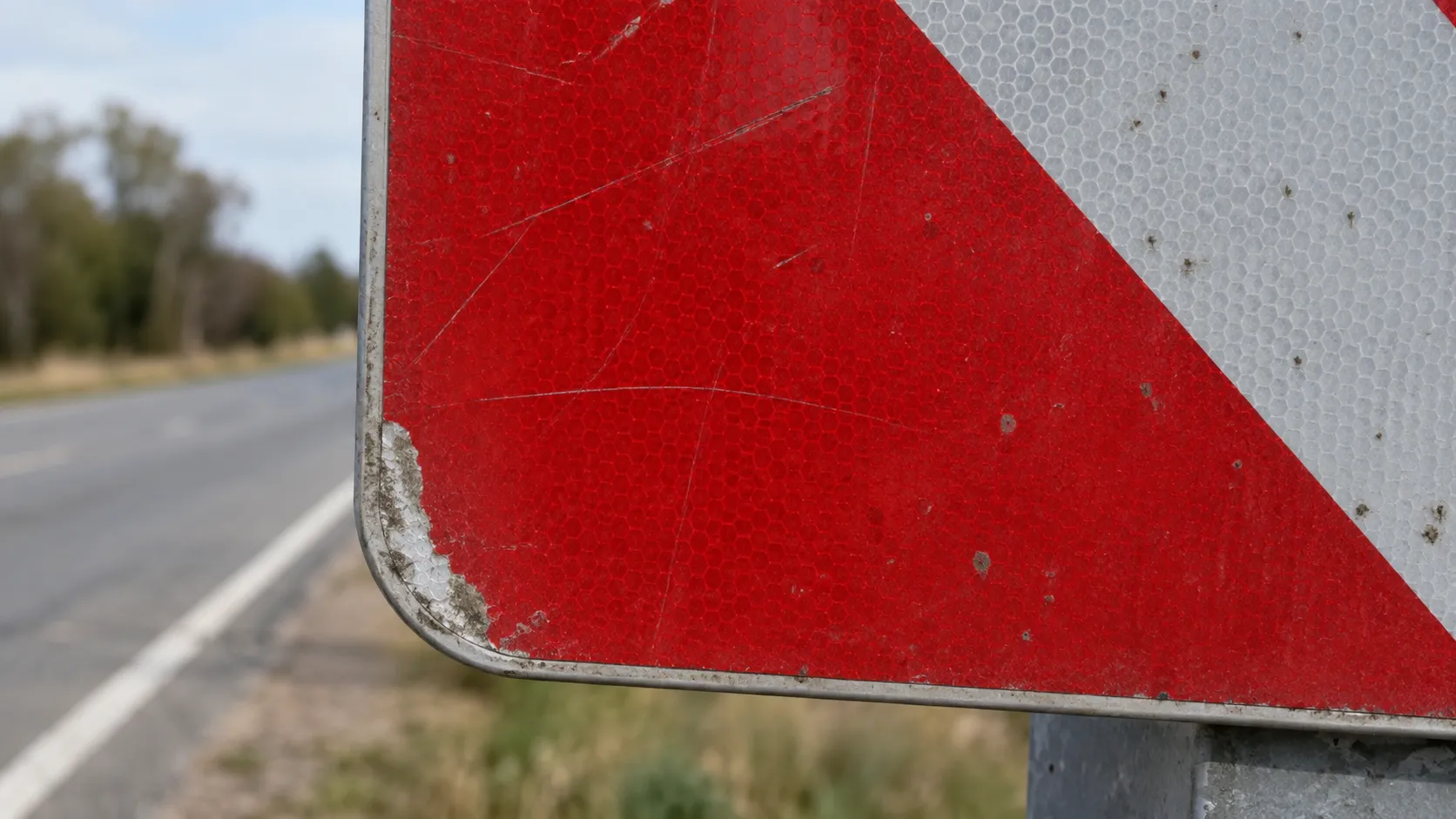
Some problems cannot be solved by cleaning.
Inspect the sign for:
Condition | Typical Action |
|---|---|
Light dirt | Clean and inspect again |
Minor surface marks | Monitor if performance remains acceptable |
Large scratches | Evaluate nighttime performance |
Cracked sheeting | Consider replacement |
Delamination | Replace affected material or sign |
Severe edge lifting | Repair only if approved; otherwise replace |
Missing film | Replace |
Bent or damaged panel | Evaluate complete sign replacement |
Damage is especially important when it exposes the aluminum substrate or allows moisture underneath the reflective sheeting.
A small cosmetic mark is different from a defect that affects visibility or allows the material to continue deteriorating.
5. The Sign Is No Longer Easy to Read
Sometimes the reflective film is not the main problem.
A sign may still look bright but be difficult to understand because:
Printed graphics have faded
Letters are damaged
A panel is bent
Trees block the view
The sign has rotated away from traffic
Another object blocks the driver's line of sight
FHWA maintenance guidance treats position, cleanliness, legibility and adequate retroreflectivity as related parts of sign maintenance, rather than treating brightness alone as the complete test.
Correct the simple problem first if possible.
A good reflective film cannot compensate for a sign that is facing the wrong direction.
6. Age Is Useful, but It Is Not the Whole Answer
Knowing the installation date is useful for sign management.
Some road authorities use expected service life as part of their replacement program. Others use nighttime inspections, measurements, control signs or blanket replacement programs.
This means:
“The warranty has ended” does not automatically mean “the sign must be replaced today.”
Likewise:
“The sign is still within the expected life” does not guarantee that it is still performing correctly.
Climate, direction of exposure, material grade, pollution, fabrication and installation can all affect actual service life.
For this reason, age records work best when combined with inspection.
Clean, Measure or Replace?
A simple decision can look like this:
Sign Condition | Next Step |
|---|---|
Dirty but otherwise normal | Clean |
Looks slightly weak at night | Inspect again |
Performance is uncertain | Measure RA |
Below required value | Replace/correct |
Severe fading | Replace |
Cracked or delaminated film | Replace |
Bent or unsafe panel | Replace sign/panel |
Obstructed by vegetation | Remove obstruction |
Incorrect sign angle | Reposition |
This prevents two expensive mistakes:
replacing signs that only need maintenance
and
leaving genuinely poor signs in service too long.
FAQ
Should a reflective sign be replaced when the warranty ends?
Not automatically.
Warranty, expected service life and actual in-service performance are related but are not exactly the same thing. Follow the maintenance method and requirements used by the road authority or project.
Can cleaning make an old sign usable again?
If dirt is the main problem, yes.
Cleaning cannot restore reflective optics or color that have permanently deteriorated.
Should every old sign be measured with a retroreflectometer?
Not necessarily.
Agencies can use different assessment or management methods. Instrument measurement is especially useful for questionable signs or projects that require documented RA values.
Final Thoughts
A reflective traffic sign should normally be replaced when its visibility, color, retroreflectivity or physical condition no longer meets the required level.
Do not make the decision from age alone.
A better sequence is:
inspect at night → inspect during daylight → clean if necessary → measure if uncertain → repair or replace
This helps keep useful signs in service while identifying signs that genuinely need attention.
RELATED NEWS

Sun, Sand and a 50°C Container: Getting Reflective Sheeting Through a Hot Climate
In hot regions, reflective sheeting can start ageing before it reaches the sign shop. UV, heat, dust and humidity each attack a different part of the product, and each needs its own defence.Picture a distributor in a hot coastal city who receives a container of prismatic sheeting in midsummer. It si
