


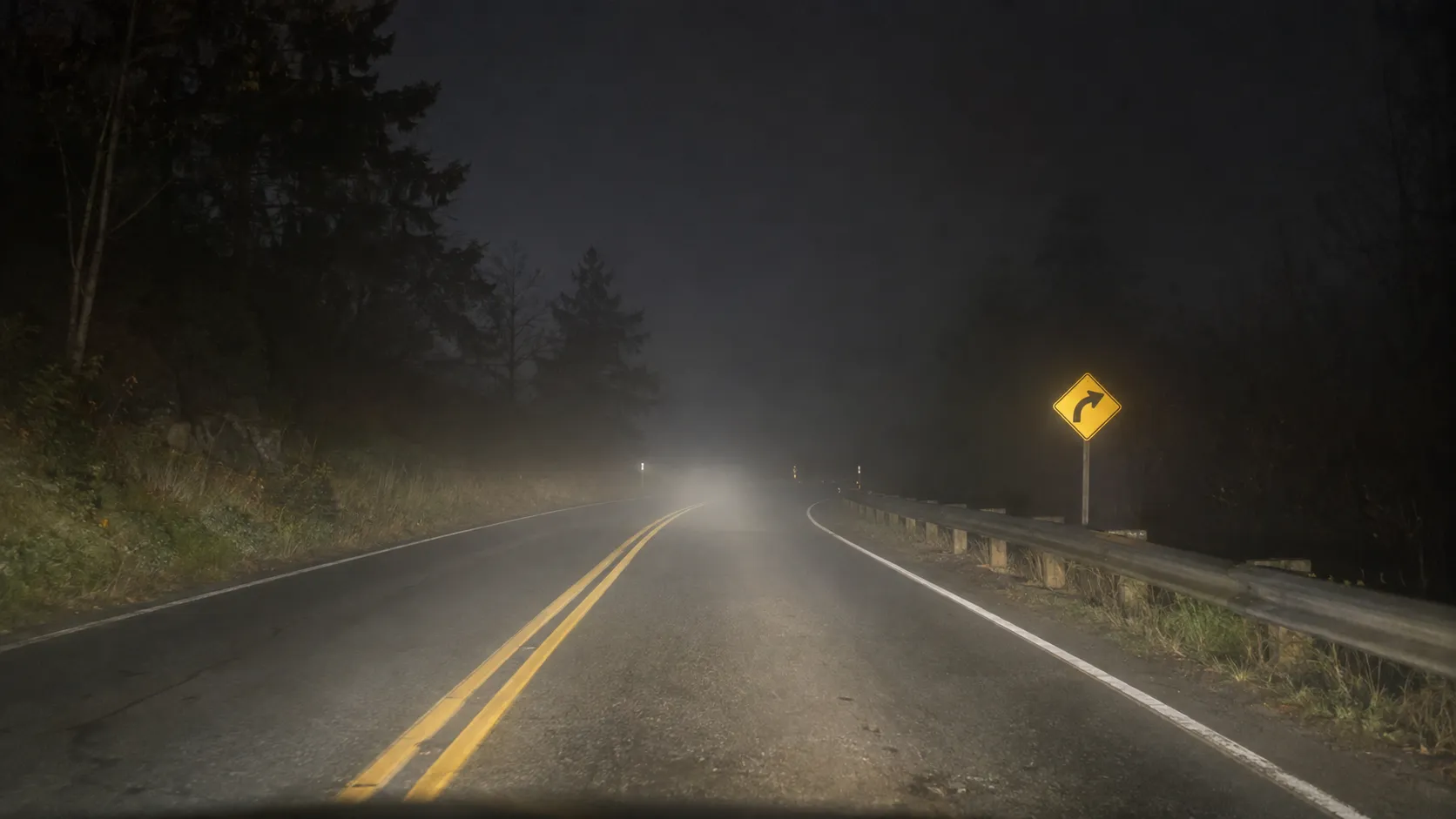
Yes. Reflective sheeting still works in fog.
A traffic sign does not suddenly stop reflecting when fog forms. Vehicle headlights can still reach the reflective surface, and the sheeting can still return part of that light toward the driver.
The problem is that fog changes the air between the vehicle and the sign.
Tiny water droplets suspended in the air scatter light. This reduces the amount of clean headlight illumination reaching the sign and also affects the light returning toward the driver.
As a result, a reflective traffic sign may still be visible but appear less clear, lower in contrast or visible from a shorter distance.
FHWA identifies atmospheric conditions such as fog, rain and snow as factors that affect the amount of light reaching a sign and the apparent brightness seen by a driver.
Why Does Fog Make Reflective Signs Harder to See?
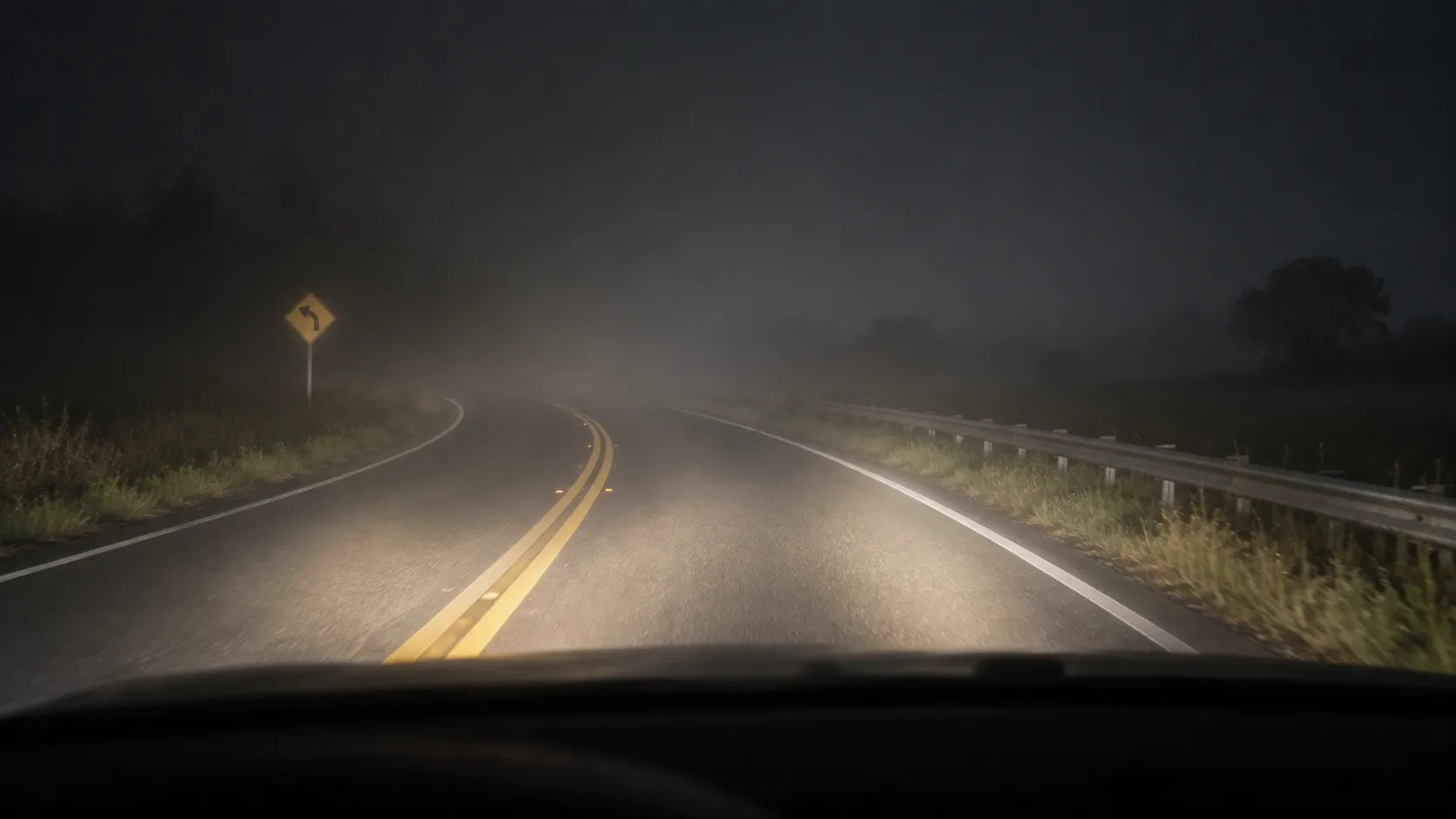
Reflective sheeting works through retroreflection.
For a simple explanation of this optical principle, see how reflective tape works.
In normal nighttime conditions:
Headlights → traffic sign → reflected light → driver
Fog adds thousands of small water droplets into this path.
Some headlight illumination is scattered before it reaches the sign. Then some of the light returning from the sign is scattered again before reaching the driver's eyes.
This reduces contrast between the sign and its surroundings.
The reflective material itself may still be performing normally. The atmosphere is simply making the complete optical path less efficient.
That is an important difference.
A sign that looks weaker during fog is not automatically an old or defective sign.
Light Fog and Dense Fog Are Very Different
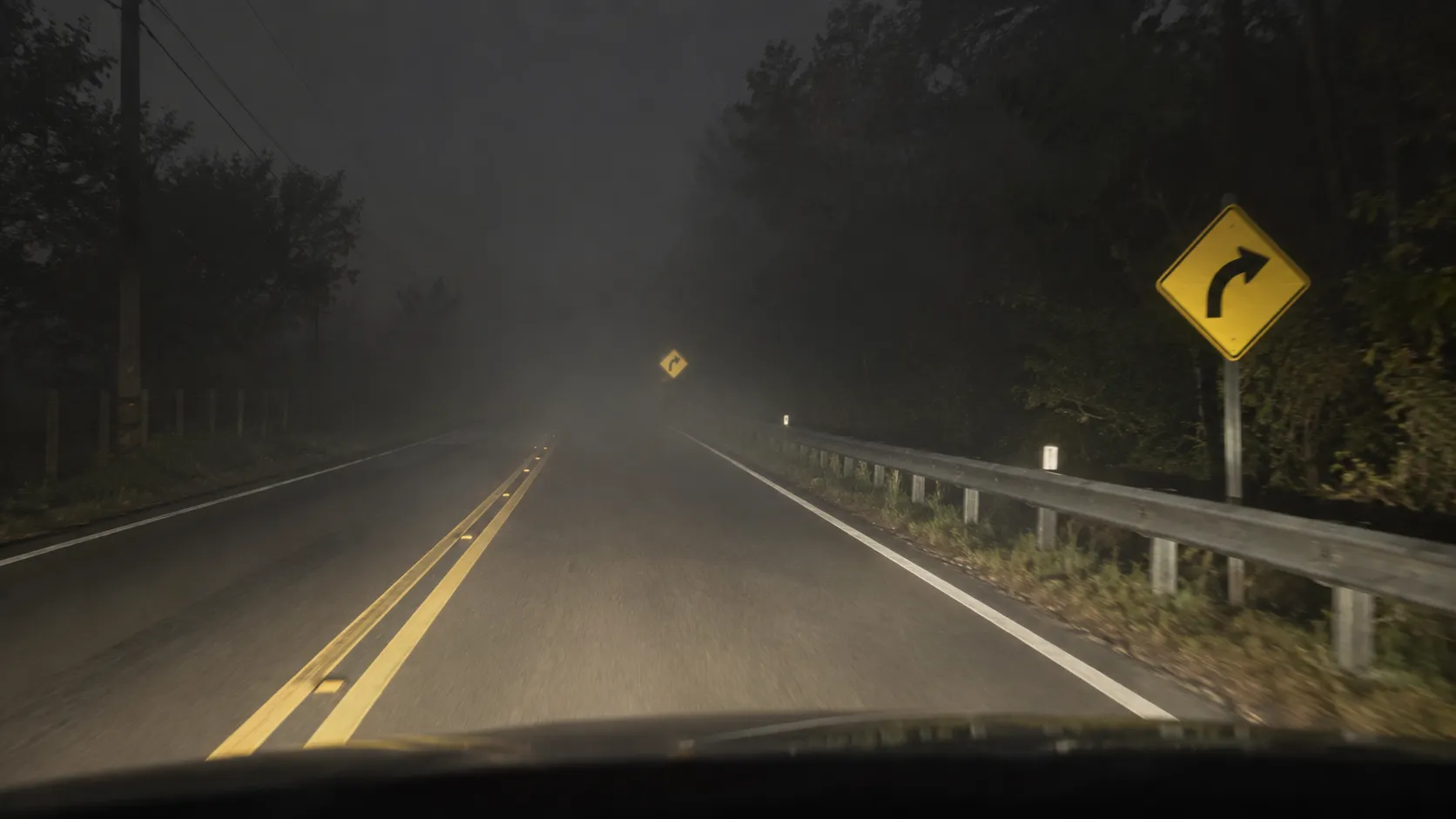
A thin layer of mist may have only a small effect.
You may still see roadside signs clearly, although their visible range can be slightly reduced.
Dense fog is different.
As fog becomes thicker, the driver's forward visibility decreases and more headlight energy is scattered back through the air. The National Weather Service treats dense fog as a significant road hazard because it can sharply reduce how far drivers can see.
In practice:
Condition | Typical Sign Appearance |
|---|---|
Clear night | Strong contrast and normal reflective appearance |
Light mist | Sign remains visible, with slightly reduced clarity |
Moderate fog | Shorter recognition distance and lower contrast |
Dense fog | Sign may only become clear at a much shorter distance |
These are general visual effects, not fixed performance values. Actual visibility also depends on headlights, sign position, sheeting condition, road geometry and viewing distance.
Why Don't High Beams Always Help in Fog?
It seems logical that more light should make signs easier to see.
In dense fog, that is not always true.
High-beam headlights send more light forward and upward into the fog. The suspended water droplets can scatter part of that light back toward the driver, creating glare and a bright haze in front of the vehicle.
That can make the road and traffic signs harder to distinguish.
The National Weather Service therefore recommends using low-beam headlights in fog and specifically warns that high beams can reflect back from fog and reduce visibility.
This is also why a reflective sign may appear more useful under controlled low-beam illumination than under a strong beam that creates excessive glare.
Does Better Reflective Sheeting Solve the Fog Problem?
Higher-performance reflective sheeting can provide stronger retroreflective performance under suitable viewing conditions.
But no passive reflective material can remove fog from the optical path.
Sign visibility still depends on a combination of:
headlight illumination + reflective sheeting + viewing geometry + atmospheric visibility + driver position
FHWA makes the same distinction between the retroreflectivity of the material and the actual luminance, or apparent brightness, of the finished sign.
So it is better not to say:
“Use brighter reflective film and fog will no longer matter.”
Instead, select the reflective grade required for the road and project, then understand that severe weather can still reduce overall visibility.
Dirt Can Make Foggy-Night Visibility Worse
Fog is not always the only issue.
A sign that already has road dust, mud, oil or other contamination may perform worse visually when atmospheric visibility is also reduced.
For routine maintenance, see how to clean reflective traffic signs without damaging the sheeting.
The driver now has two problems:
the air is scattering light, and the dirty sign surface is reducing the amount of useful light reaching and leaving the reflective material.
This is why maintenance still matters.
If one traffic sign looks unusually weak compared with nearby signs after the fog has cleared, inspect the surface during daylight.
A sign that simply needs cleaning should not immediately be treated as failed reflective sheeting.
What Happens After the Fog Clears?
If the reflective sheeting is in good condition, normal visibility should return when atmospheric conditions improve.
Fog itself does not normally cause a permanent reduction in retroreflectivity simply because the sign was viewed through fog.
However, fog can be accompanied by dew or surface moisture.
If water droplets form directly on the sign surface, the situation becomes closer to wet-weather performance because the moisture can also alter how light enters the reflective surface.
You can read more about this surface-water effect in our guide to how reflective sheeting performs in rain.
So there can sometimes be two effects at the same time:
fog in the air + moisture on the sign
This is one reason real road conditions are more complicated than laboratory measurements.
How Should You Check a Sign That Looks Weak in Fog?
Do not judge the reflective material only during poor weather.
Check the same sign again after the fog clears.
A nighttime visual inspection under normal headlight conditions is a useful next step.
Look at whether the sign appears normal under vehicle headlights, whether the surface is clean and whether its brightness is reasonably uniform.
If it still appears unusually weak in clear conditions, then investigate other causes such as aging, dirt, surface damage, incorrect orientation or reduced retroreflectivity.
For formal projects, use the required inspection procedure or measurement equipment rather than trying to estimate reflective performance from visibility during fog.
FAQ
Does fog stop retroreflection?
No. Reflective sheeting can still return incoming light, but fog scatters light traveling between the headlights, sign and driver.
Why can I see a sign but not the road clearly in fog?
Reflective sheeting concentrates returned light toward the light source, while ordinary road surfaces reflect light much more diffusely. This can make a nearby reflective sign remain noticeable even when the surrounding road has poor contrast.
Is a sign defective if it looks dim in fog?
Not necessarily. Check the sign again in clear, dry conditions before deciding that the material has lost performance.
Final Thoughts
Reflective sheeting does work in fog.
The main limitation is not that the reflective film suddenly stops working. The problem is that fog interferes with the light traveling through the air.
That can reduce:
visibility distance → contrast → apparent brightness → recognition time
For normal traffic signs, the best approach is to use the correct reflective grade, keep the sign clean and evaluate questionable signs again under clear nighttime conditions.
Fog affects the whole viewing environment—not only the reflective material.
RELATED NEWS

Hit, Stacked, Hosed Down, Put Back Out: Reflective Sheeting for Cones, Drums and Work-Zone Devices
Hit, Stacked, Hosed Down, Put Back Out: Reflective Sheeting for Cones, Drums and Work-Zone DevicesA permanent sign spends its life bolted to a post. A traffic cone spends its life being struck, nested, thrown into a truck and pressure-washed. The sheeting has to be specified for the life the device

Reflective Is a Feature, Visible Is a Claim: EN 17353 for Running, Cycling and Children's Products
Reflective Is a Feature, Visible Is a Claim: EN 17353 for Running, Cycling and Children's ProductsAdding reflective trim to a jacket is a design decision. Telling customers it keeps them visible is a protective claim — and in Europe, protective claims have a standard behind them.A children's outerwe