


Yes. Reflective sheeting can still reflect light when it rains.
However, a wet traffic sign may not look as bright as the same sign on a dry night.
Reflective sheeting works by returning light from vehicle headlights back toward the driver. Rain can interfere with this process in two ways: water can cover the sign surface, and rain in the air can reduce how much light travels between the headlights, sign and driver.
This does not mean the reflective sheeting has stopped working. It simply means wet-weather visibility can be lower than dry-weather visibility. The FHWA also notes that rain can reduce the performance of retroreflective traffic control devices.
Why Can a Wet Reflective Sign Look Dimmer?
A dry reflective sign has a relatively clear optical path.
Vehicle headlights reach the sign, the reflective structure redirects part of that light, and the light returns toward the driver.
During rain, water droplets or a thin water layer can form on the sign face.
This changes how light enters and leaves the surface. Some light may be scattered or redirected instead of following the normal retroreflective path.
The result can be simple:
Dry sign → stronger, clearer reflection
Wet sign → reflection still visible, but sometimes weaker
Water on the surface is one reason manufacturers also offer special anti-dew or wet-weather solutions. For example, ORAFOL describes an anti-dew overlay designed to reduce water droplets so that the reflective film underneath can continue to retroreflect more effectively.
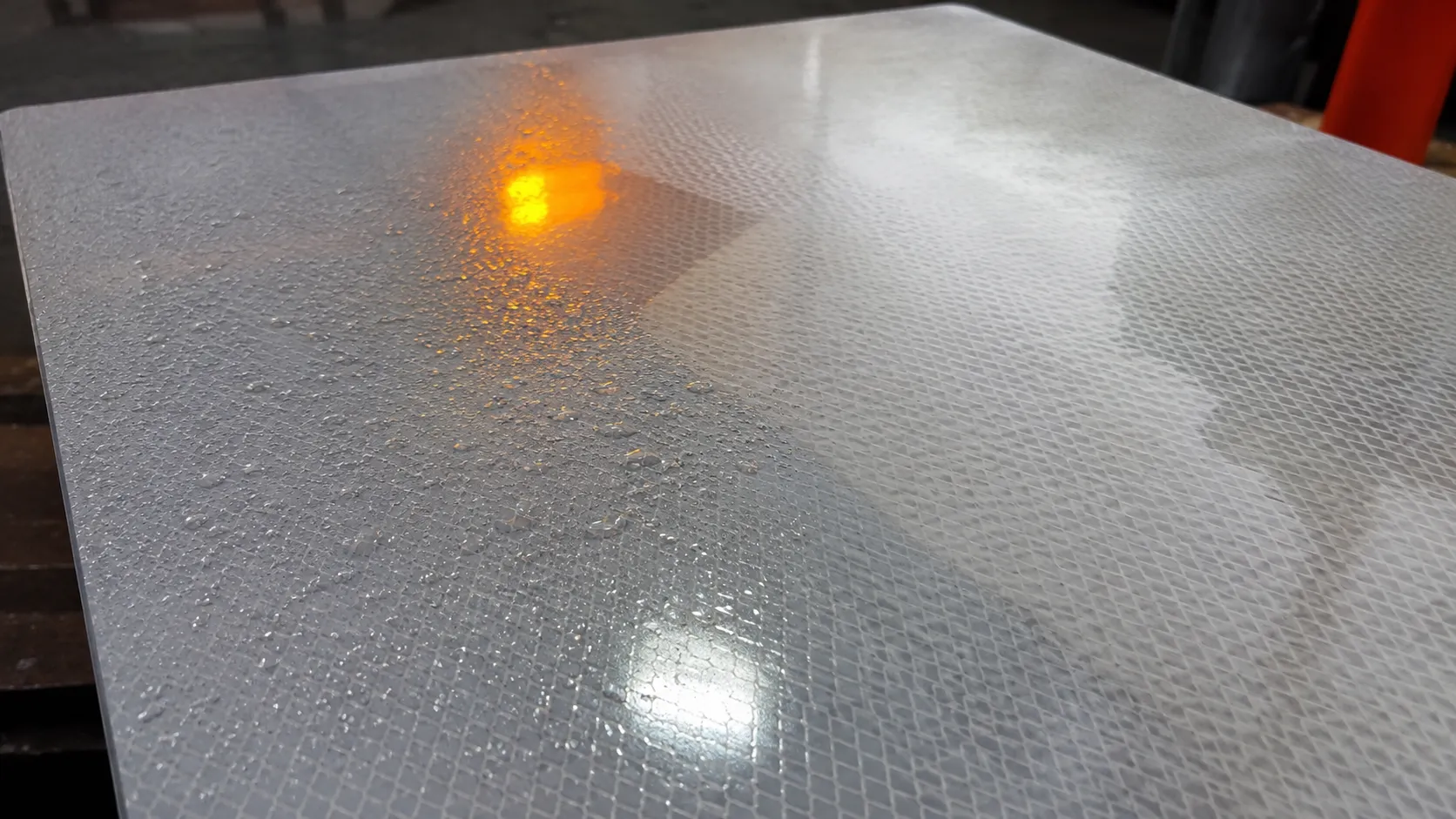
Rain in the Air Matters Too
The sign surface is only part of the problem.
On a rainy night, headlights also need to travel through rain before reaching the sign and then travel back toward the driver's eyes.
Heavy rain, mist and spray can scatter light.
Wet roads also produce many reflections from:
streetlights, headlights, traffic signals and other vehicles.
This creates more visual background around the traffic sign.
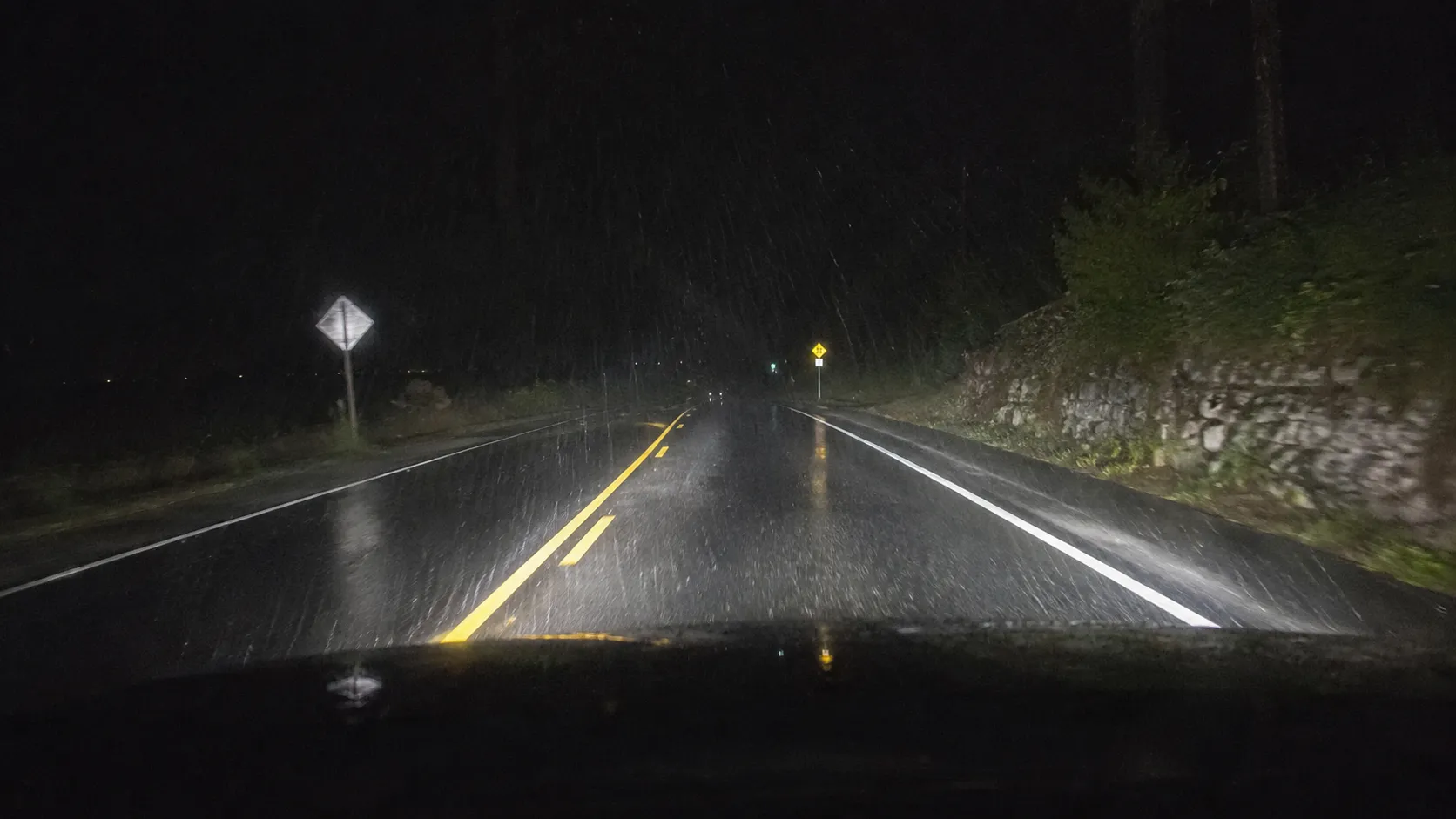
That is why driving in heavy rain can feel visually more difficult even when the traffic signs themselves are still reflective. FHWA notes that sign brightness depends not only on the reflective material but also on weather, viewing geometry, moisture on the sign face and the amount of light reaching the sign.
Does the Sign Return to Normal After It Dries?
Normally, rain on an installed outdoor sign is temporary.
Water runs off or evaporates after the weather improves. Avery Dennison notes that normal rain or dew contacting an installed sign is different from moisture being trapped against reflective sheeting during storage or shipping.
Once the surface becomes dry, normal reflection should return if the sheeting itself is still in good condition.
If a sign remains unusually dim after drying, check for other problems such as:
dirt, surface damage, aging, scratches, delamination or loss of retroreflectivity.
In that situation, rain may not be the real cause.
Dirt Plus Rain Can Make the Problem Worse
A clean sign and a dirty sign may behave very differently in wet weather.
Dust, road spray, mud and oily deposits can build up on the surface over time.
When rain mixes with this contamination, the surface may become even harder for light to pass through cleanly.
This is especially common on signs located near:
busy roads, construction areas, industrial sites and muddy roads.
So if a traffic sign looks much darker than nearby signs during rain, inspect the surface condition as well as the reflective material.
Cleaning and maintenance are part of maintaining nighttime visibility.
Does Higher-Grade Reflective Sheeting Help?
Different reflective sheeting grades have different optical structures and retroreflective performance.
Engineering Grade, High Intensity Prismatic and higher-performance traffic-sign materials should therefore be selected according to the road, viewing distance, sign specification and local requirements.
But a higher dry retroreflectivity value does not mean rain has no effect.
Wet-weather visibility is a complete system involving:
reflective material + sign condition + headlights + rain + viewing angle + road environment.
For an actual traffic-sign project, material selection should follow the required standard rather than simply choosing the brightest film available.
What Should You Check After Heavy Rain?
There is usually no need to replace a traffic sign simply because it looked slightly dimmer during rain.
After the sign dries, inspect whether the surface is clean and whether its nighttime appearance returns to normal.
Pay more attention if you see permanent problems such as cloudy areas, water trapped inside the material, edge lifting, surface damage or obvious loss of reflection.
Those conditions may indicate a material, fabrication or installation problem rather than normal rainy-weather behavior.
FAQ
Is reflective sheeting waterproof?
Traffic-sign reflective sheeting is designed for outdoor use, but exact weather resistance and durability depend on the specific product construction and correct application. Always check the technical data for the material being used.
Does rain completely stop retroreflection?
Usually no. The sign can remain reflective, but rain and surface water may reduce how bright or clear it appears to the driver. FHWA specifically recognizes reduced retroreflective performance under wet-weather conditions.
Why are traffic signs harder to see during heavy rain?
Rain can affect the sign surface, scatter headlight illumination and create additional reflections from wet roads. All of these factors can reduce nighttime visibility.
Final Thoughts
Reflective sheeting does work in rain, but wet does not always perform exactly like dry.
Water droplets, heavy rainfall, road spray and dirt can reduce how clearly a reflective sign appears at night.
For normal outdoor traffic signs, occasional rain is part of the expected environment. The important point is to use the correct reflective sheeting, fabricate the sign properly and keep the surface in good condition.
If a sign remains noticeably dim after it is clean and dry, then the reflective material and finished sign should be inspected more carefully.
RELATED NEWS

Sun, Sand and a 50°C Container: Getting Reflective Sheeting Through a Hot Climate
In hot regions, reflective sheeting can start ageing before it reaches the sign shop. UV, heat, dust and humidity each attack a different part of the product, and each needs its own defence.Picture a distributor in a hot coastal city who receives a container of prismatic sheeting in midsummer. It si
