


Reflective sheeting may peel from a sign panel, curl after the liner is removed, crack during cutting or lose printed ink after curing. Although these failures can look similar, they do not necessarily have the same cause.
A peeling problem may come from surface contamination, insufficient application pressure, an incompatible substrate or internal delamination. Curling may result from poor storage, moisture imbalance, excessive converting tension or the dimensional behavior of the face film. Ink failure usually indicates an incompatible ink–surface combination, inadequate curing or excessive UV energy rather than a problem with the pressure-sensitive adhesive.
The most reliable troubleshooting method is to identify exactly which layer has failed before changing materials or production settings.
Changzhou Zhenghe New Material Technology Co., Ltd., manufacturer of ABLAZE reflective materials, uses this layer-by-layer approach when helping sign makers, printers and reflective sheeting distributors investigate production or field failures.
Quick Answer: What Causes Reflective Sheeting to Fail?
The most common causes of reflective sheeting failure are:
Dust, grease, wax, silicone or moisture on the application surface
Application below the product’s minimum temperature
Insufficient or uneven squeegee or laminator pressure
Application to porous, rough, flexible or outgassing substrates
Using a rigid film on curves or a flexible film in an unsuitable structural application
Incorrect storage temperature, humidity or roll orientation
Excessive roll, rewinding or laminating tension
Use of ink that is incompatible with the sheeting surface
Incomplete solvent evaporation or insufficient ink curing
Excessive UV lamp energy, heat or ink-film thickness
Outdoor UV exposure, thermal cycling, chemicals or water entering damaged edges
Physical damage caused by cutting, folding, abrasion or excessive pressure
Using a product grade that is not designed for the required service life or application
Before assuming that the material itself is defective, identify the failed layer and compare the application conditions with the product specification.
First Identify Which Layer Is Failing
Reflective sheeting is a multi-layer material. Depending on the product, it may contain a printable surface or protective face film, glass beads or microprisms, a reflective or sealing layer, pressure-sensitive adhesive and a release liner.
Where the separation occurs provides the first and most important diagnostic clue.
What You See | Likely Failure Interface | Common Interpretation |
|---|---|---|
The entire film lifts and the substrate remains clean | Adhesive-to-substrate interface | Contamination, low application temperature, low pressure or incompatible substrate |
Adhesive remains on both the film and substrate | Adhesive cohesive split | Chemical attack, excessive heat, aging or adhesive damage |
Adhesive stays on the panel while the face film separates | Film-to-adhesive or internal layer | Internal delamination, moisture ingress, extreme stress or material incompatibility |
Only printed ink comes off | Ink-to-face-film interface | Wrong ink, surface contamination, inadequate treatment or curing problem |
A transparent top layer peels away | Topcoat or overlay interface | Weathering, laminate incompatibility, edge damage or internal delamination |
The film cracks but remains bonded | Face-film failure | Embrittlement, excessive stretching, cold converting, UV aging or wrong material for the curve |
Dark or non-reflective areas appear | Optical structure damage | Compression, moisture, heat, abrasion or damage to the bead/prism structure |
Do not describe every separation as “peeling.” A clear description of the failed interface can eliminate several incorrect causes immediately.
For a detailed explanation of the different material constructions, see PET vs PVC vs Acrylic Reflective Sheeting.
Reflective Sheeting Troubleshooting Chart
Symptom | Most Likely Causes | First Check | Recommended Action |
|---|---|---|---|
Edge lifting shortly after application | Dirty edge, insufficient pressure, low temperature | Substrate temperature and edge contact | Clean a new panel, repeat application and re-squeegee all edges |
Complete sheet peels cleanly | Wax, silicone, oil, unsuitable substrate | Residue on substrate and adhesive wet-out | Stop production and conduct a controlled substrate test |
Curling after liner removal | Roll memory, tension imbalance, humidity difference | Curl direction and storage history | Acclimate material and review storage and conversion tension |
Roll telescoping or uneven edges | Poor roll handling or rewinding tension | Carton condition, core alignment and roll ends | Quarantine damaged rolls and correct storage or rewinding |
Cracks during cutting or folding | Rigid material, low temperature, blunt tooling | Film type, room temperature and blade condition | Warm and acclimate material; use sharper tooling or a more flexible grade |
Cracks after outdoor exposure | UV aging, thermal cycling, chemical exposure | Installation age and exposure direction | Measure performance and replace if structural damage is present |
UV ink scratches off immediately | Incompatible surface or under-cure | Ink compatibility and UV dose | Stop production and qualify the ink–sheeting combination |
Ink passes initially but peels after 24–72 hours | Delayed adhesion failure, excessive ink or residual stress | Repeat adhesion test after conditioning | Adjust ink load and curing or select a printable grade |
Ink remains tacky | Incomplete drying or excessive ink deposit | Heater, airflow, solvent and ink thickness | Extend controlled drying and reduce ink load |
Reflectivity decreases after printing | Excessive ink coverage, opaque ink or heat damage | Unprinted control sample and printed RA | Reduce coverage or use approved translucent traffic-sign ink |
Bubbles appear after application | Trapped air, moisture or substrate outgassing | Bubble pattern and substrate type | Test an unprinted sample on the same substrate |
Dark patches appear during storage | Pressure marks or trapped moisture | Packaging and stack orientation | Separate affected stock and correct packaging conditions |
Why Does Reflective Sheeting Peel or Lift at the Edges?
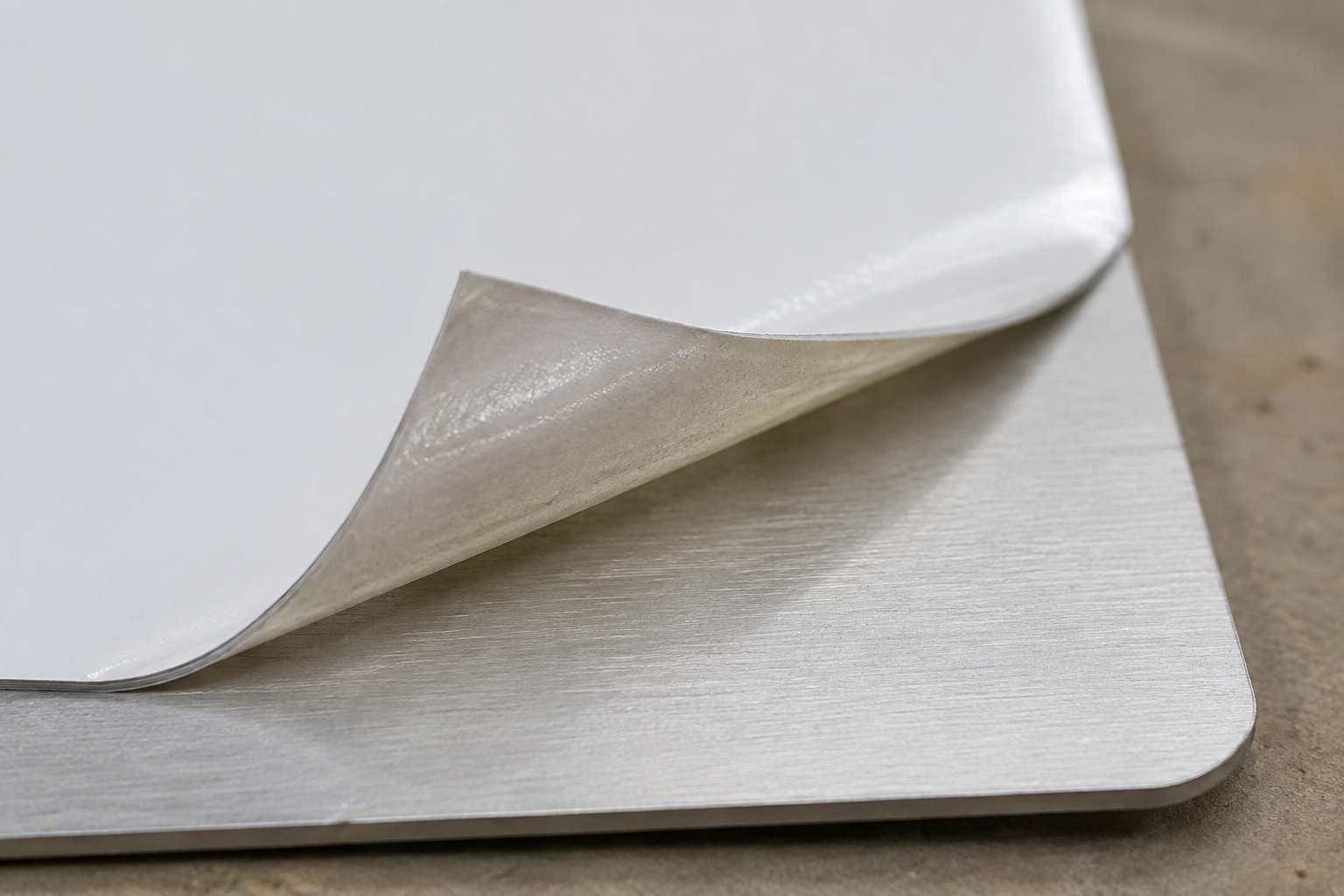
Reflective sheeting peeling usually begins at the weakest point: a corner, cut edge, overlap, rivet, panel joint or area that did not receive uniform pressure.
1. The Surface Was Not Properly Cleaned
Oil, grease, wax, silicone, dust and cleaning-product residue can form an invisible barrier between the adhesive and substrate.
This often produces clean separation: the entire reflective film lifts while little or no adhesive remains on the panel.
Use a cleaning procedure approved for both the substrate and reflective sheeting. Clean with lint-free cloths, allow the surface to dry completely and avoid touching the cleaned area with bare hands.
A shiny-looking panel is not necessarily a clean panel. Freshly painted, polished or powder-coated surfaces require particular attention.
2. The Substrate Is Incompatible
Pressure-sensitive reflective sheeting normally bonds best to smooth, dry, stable and non-porous surfaces. Problems may occur on:
Rough or textured plastic
Low-surface-energy plastics
Untreated polyethylene or polypropylene
Flexible banners
Corroded or chalking paint
Porous wood
Rubber
Fresh paint
Outgassing plastic or composite panels
Highly curved or flexible components
Conduct an application test on the actual production substrate, not only on a laboratory aluminum panel.
For rigid traffic-sign applications, review the available engineering grade reflective sheeting and confirm the approved substrate before production.
3. Application Temperature Was Too Low
Pressure-sensitive adhesive needs adequate temperature and pressure to flow into microscopic surface irregularities.
If the material or substrate is too cold, the adhesive may feel tacky but fail to develop a strong bond. Moving the finished sign immediately into a colder environment can further delay adhesion build.
Measure the substrate temperature, not only the room temperature. Metal panels can remain considerably colder than the surrounding air.
The exact minimum temperature depends on the product. Many reflective film systems require application at approximately 15°C or above, but the product datasheet must take priority.
4. Application Pressure Was Insufficient or Uneven
Light hand pressure does not always create complete adhesive contact.
Typical pressure-related failures include:
Lifting along panel edges
Narrow unbonded channels
Repeating bubbles
Peeling around cut letters
Lifting where laminator pressure changes
Poor bonding around rivets or panel profiles
Use firm, overlapping squeegee strokes or a correctly adjusted squeeze-roll applicator. Pay special attention to corners, edges, seams and overlaps.
Do not excessively stretch the reflective film during application. Stored tension may later pull the film back from the edge.
5. Moisture or Solvent Was Trapped
Moisture can prevent adhesive contact and may also migrate into exposed or damaged layers.
Solvent retained in fresh paint, printed ink or an application fluid may create bubbles, soft adhesive, edge lifting or delayed separation. Allow coatings, inks and cleaned substrates to dry or cure fully before laminating or applying reflective sheeting.
6. The Wrong Grade Was Used
A commercial printable PVC film and a rigid engineering-grade material do not have the same intended use.
For example, PVC reflective vinyl is normally more suitable for commercial graphics and simple curves. A semi-rigid PET or rigid acrylic product may offer dimensional stability but can resist conforming to a curved surface.
Select the product according to:
Flat or curved substrate
Indoor or outdoor exposure
Required durability
Printing method
Cutting method
Mechanical movement
Required retroreflective performance
Why Does Reflective Sheeting Curl Before or After Application?
Curling can occur while the product is still on the liner, immediately after liner removal or after the film has been applied.
These conditions should be investigated separately.
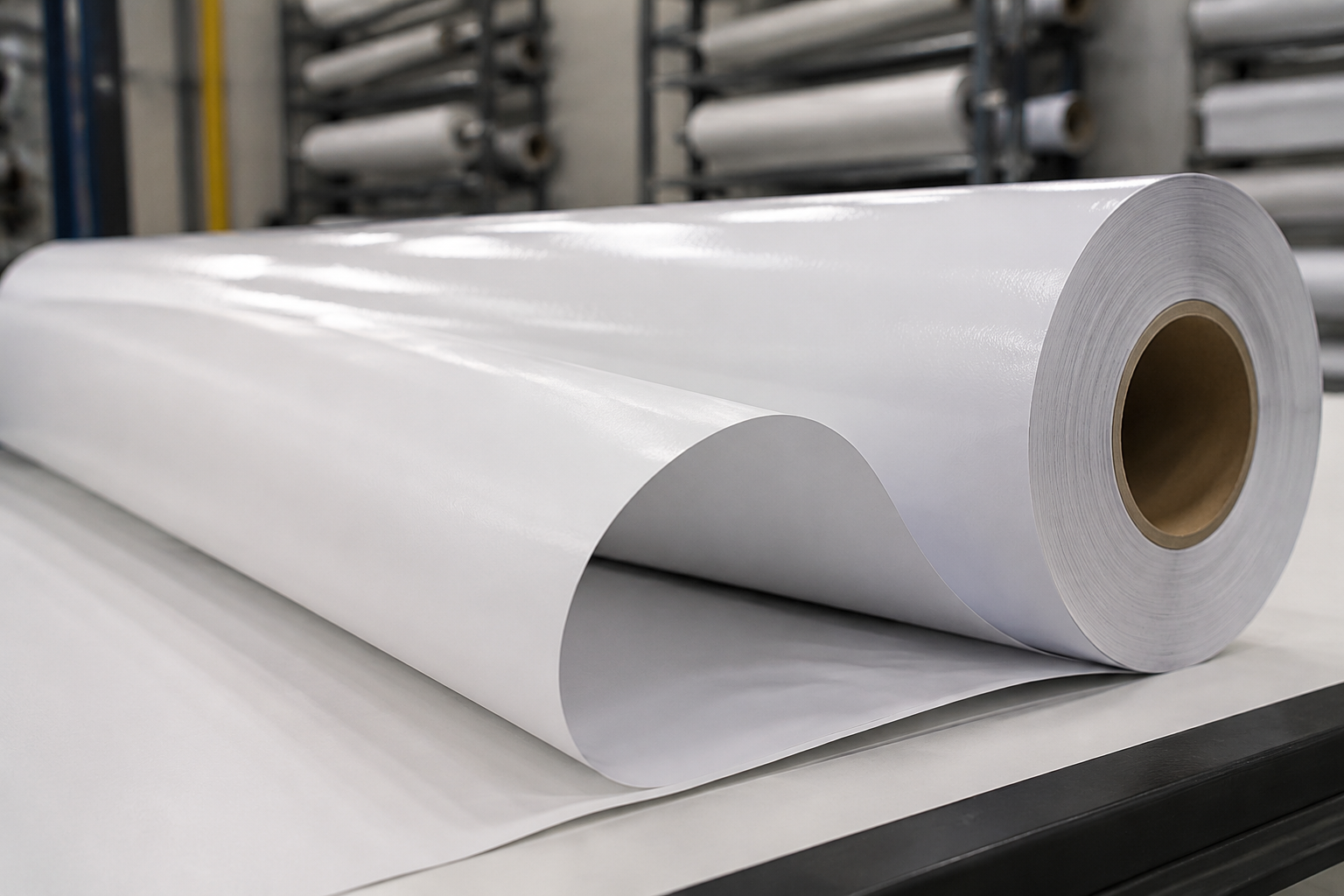
Curling While the Film Is Still on the Liner
Possible causes include:
Moisture imbalance between the face film and paper liner
High or fluctuating warehouse humidity
Storage near heaters, windows or direct sunlight
Roll stored without adequate core support
Excessive rewinding tension
Damaged or deformed core
A partially used roll left unprotected
Long-term storage beyond the recommended shelf life
Store rolls in their original cartons or on a supported core according to the product instructions. Avoid placing the reflective surface directly against a hard floor or shelf.
A controlled indoor environment around 18–25°C and 40–60% relative humidity is commonly used for reflective materials, but the specified conditions for each product should prevail.
Curling Immediately After Liner Removal
Some temporary curl may be roll memory rather than a product defect.
Allow the cut sheet to relax on a clean, flat surface. If the curl reduces after conditioning, the cause is more likely storage or roll memory. If it remains severe or differs significantly between rolls from the same shipment, investigate liner tension, coating balance and batch consistency.
Curling After Application
Post-application curling is normally related to:
Inadequate edge adhesion
Contamination at the perimeter
Film applied under tension
Dimensional mismatch between the film and substrate
Exposure to solvents or plasticizers
Repeated heating and cooling
An unsuitable laminate
Water or chemicals attacking exposed edges
Do not assume that reheating will permanently solve the problem. Heat may temporarily soften a flexible film, but excessive heat can distort or damage the face film and optical structure.
Why Does Reflective Sheeting Crack, Shrink or Become Brittle?
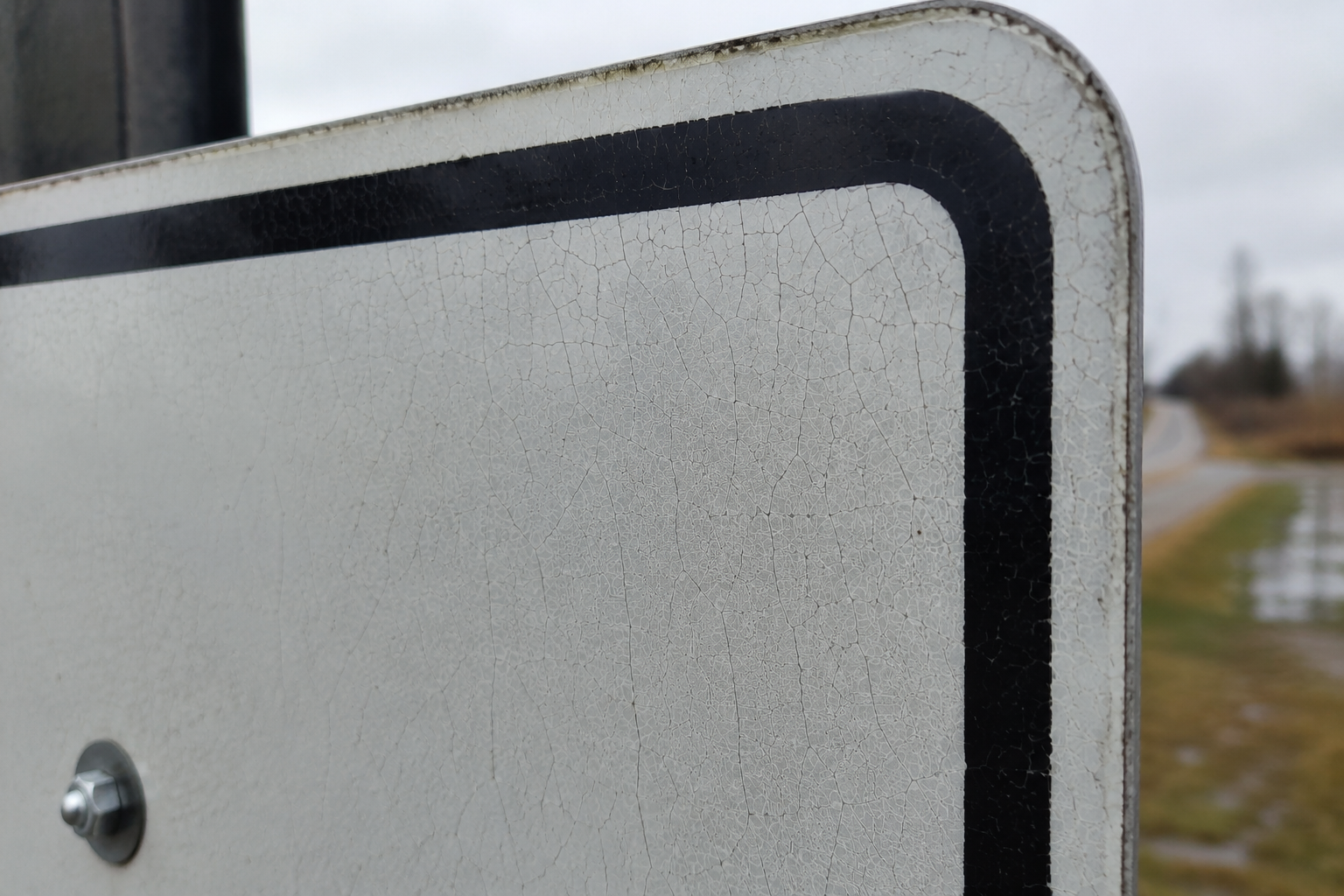
Cracking is a structural failure of the face film, printed ink or laminate.
Cracking During Cutting or Fabrication
Common causes include:
The selected reflective sheeting is too rigid for folding or tight curves
The material has not acclimated after cold storage
A knife or die is blunt
Cutting pressure is excessive
Several sheets are compressed together
The film is bent sharply across a cold edge
The product is being used below its recommended processing temperature
Acrylic and semi-rigid PET materials should not be processed as if they were soft PVC vinyl. Use clean, sharp tooling and qualify the bend radius before mass production.
Cracking After Application
If cracking appears around curves, rivets or recessed areas, the material may have been stretched beyond its conformability.
If cracks appear across large outdoor areas after years of service, likely causes include:
Long-term UV exposure
Repeated thermal expansion and contraction
Oxidation or weathering of the face film
Chemical exposure
Abrasion
Loss of plasticizer or flexibility
End of the product’s intended service life
A protective laminate cannot restore a face film that has already become brittle. Widespread cracking normally requires replacement.
Ink Cracking Without Film Cracking
If the face film remains flexible but the printed image cracks, the ink layer may be too thick or too rigid for the application.
Check:
Ink-film thickness
Number of print passes
UV curing energy
Compatibility between ink and film
Flexibility of the cured ink
Laminate stiffness
Whether the printed material was bent or rolled too tightly
Why Does Ink Peel Off Reflective Sheeting?
Ink adhesion is determined by the complete printing system—not by the printer alone.
The critical variables include:
Reflective sheeting face material and surface coating
Surface energy
Ink chemistry
Primer or pretreatment
Ink-film thickness
Printer heater settings
UV lamp output
Printing speed
Drying or curing time
Ambient temperature and humidity
Lamination timing
Outdoor exposure
The first rule is simple: not every reflective sheeting is printable with every ink system.
Read Can You UV Print on Reflective Sheeting? before qualifying a new UV printing combination.
Ink Peels or Scratches Off Immediately
The most likely causes are:
The material has no compatible printable topcoat
The ink is not formulated for the surface
Dust, oil or release contamination is present
UV curing is insufficient
Solvent or eco-solvent ink has not dried
The ink deposit is excessively thick
Stop production and print a small test strip using controlled settings. Do not solve poor adhesion simply by applying more ink or maximum UV power.
Ink Passes Initially but Fails After 24–72 Hours
Delayed ink failure is especially important because a print may appear acceptable when it leaves the printer.
Possible causes include:
Residual stress in an over-cured UV ink layer
Weak interfacial adhesion
Excessively heavy ink deposit
Incomplete solvent release
Lamination before the print has fully dried
Incompatibility that develops after cooling or conditioning
Migration from the face film or laminate
Test ink adhesion immediately, after 24 hours and again after 72 hours whenever qualifying a new combination.
Ink Remains Tacky or Smears
Check:
Ink age and storage
Heater temperature
Airflow
Printing speed
Ink limit
Color profile
Solvent evaporation time
Ambient humidity
Whether finished prints were stacked too soon
Printed sheets should not be tightly stacked or packaged while solvents or heat remain in the material.
UV Ink Cracks After Bending
More UV energy is not always better. Excessive curing can produce a hard, brittle ink film that cracks when the reflective material bends.
Reduce unnecessary ink thickness, adjust curing energy gradually and evaluate both adhesion and flexibility.
Printing Compatibility by Material
Reflective Sheeting Material | Commonly Suitable Printing Methods | Main Ink-Failure Risk |
|---|---|---|
Printable PVC reflective vinyl | Eco-solvent, solvent, selected latex and compatible screen ink | Incomplete drying, plasticizer interaction or excessive heat |
Standard PET glass-bead sheeting | Mainly cutting and compatible screen-printing systems | Poor UV adhesion on untreated, low-surface-energy PET |
Printable acrylic reflective sheeting | Compatible screen and qualified UV systems | Brittle ink or inadequate surface compatibility |
Engineering-grade sheeting | Product-specific traffic-sign screen or digital systems | Loss of durability or reflectivity with unapproved ink |
Microprismatic sheeting | Manufacturer-qualified traffic-sign ink and printing system | Heat, pressure or chemistry damaging the prism construction |
For more product-selection guidance, see the Printable Reflective Sheeting Buying Guide.
How to Test Ink Adhesion Before Mass Production
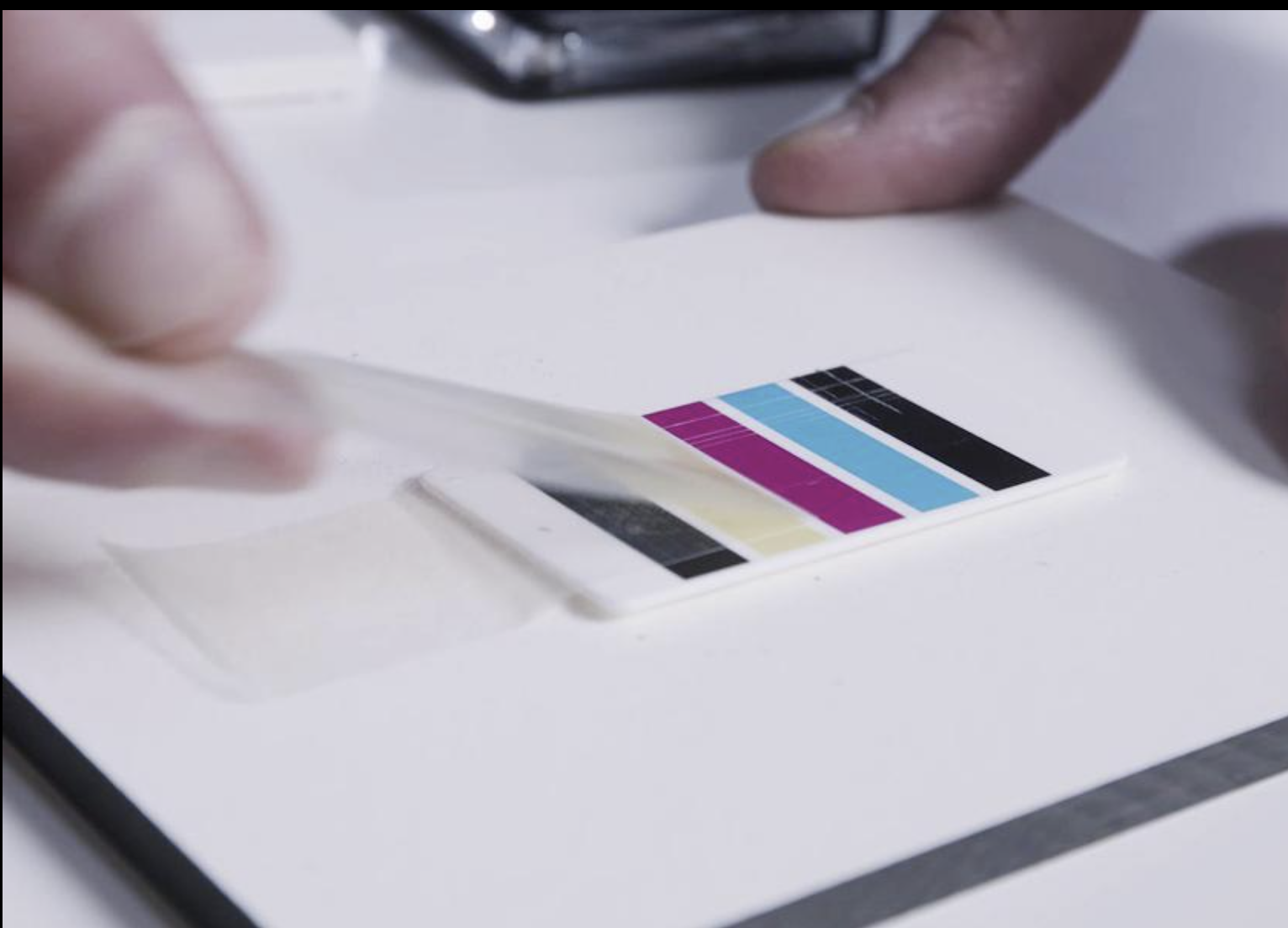
Use the following qualification sequence:
Record the reflective sheeting product, batch and roll number.
Condition the material in the printing room.
Print a small sample using the intended production mode.
Record ink type, ink limit, heater settings, UV power and printing speed.
Allow the sample to dry or cure for the specified period.
Perform a controlled scratch or cross-hatch tape test.
Repeat the adhesion test after 24 and 72 hours.
Bend the sample only if the final application requires flexibility.
Apply the intended laminate and repeat the test.
Compare daytime color and nighttime reflectivity with an unprinted control sample.
Expose a retained sample to the intended water, temperature and cleaning conditions.
Approve mass production only after the complete system passes.
The test method, tape, cut depth and conditioning time should remain consistent so results can be compared between batches.
See the complete reflective sheeting quality testing checklist for additional incoming inspection procedures.
Bubbles, Wrinkles, Delamination and Dark Reflective Spots
Bubbles
Bubbles appearing immediately usually indicate trapped air or poor application technique. Bubbles developing later may indicate moisture, solvent retention or substrate outgassing.
A repeating bubble pattern across different sheets often points to the substrate or application process rather than random material contamination.
Wrinkles
Wrinkles can result from:
Excessive web tension
Misaligned laminator rollers
Applying a large sheet too quickly
Uneven squeegee pressure
Stretching the material
Processing a cold roll before acclimation
Incompatible laminate shrinkage
If wrinkles repeat at regular intervals, inspect the rollers and tension system.
Internal Delamination
Internal delamination occurs when layers inside the reflective sheeting separate.
Signs include:
A transparent skin lifting from the reflective layer
Adhesive remaining on the substrate while the optical film separates
Milky or dark areas spreading from edges
Loss of contrast or reflectivity
Water entering broken cells or exposed layers
Internal delamination cannot normally be corrected by re-squeegeeing. Quarantine the affected material and retain samples for investigation.
Dark or Non-Reflective Spots
Dark spots can be caused by:
Local compression of the optical structure
Hard objects pressing against a stored roll
Excessive laminator pressure
Moisture trapped during storage
Damage to glass beads or microprismatic cells
Abrasive cleaning
Excessive printing or laminating heat
Opaque ink coverage
Evaluate dark areas under the same entrance and observation geometry. A handheld light viewed close to the eye can provide a quick comparison, but contractual measurements should use a calibrated retroreflectometer.
For a technical explanation of these measurement conditions, see Coefficient of Retroreflection Explained.
Troubleshooting by Reflective Sheeting Material
PVC Reflective Vinyl
PVC is flexible and normally the easiest option for digital printing and simple curves.
Common problems include:
Edge lifting caused by stretching
Curling caused by excessive tension
Solvent retention after heavy printing
Shrinkage or plasticizer interaction
Ink or laminate cracking when the finished system is too stiff
PVC should not automatically be selected for permanent traffic signs simply because it is easy to print. Review its intended outdoor life and application category.
PET Reflective Sheeting
PET is more dimensionally stable and semi-rigid.
Common problems include:
Roll memory
Cracking at sharp folds
Poor adhesion on tight curves
UV ink rejection on standard uncoated PET
Heat-related deformation during aggressive curing
Edge lifting when forced onto unsuitable contours
ABLAZE generally recommends screen printing or cutting for standard PET grades unless a specifically qualified printable construction is supplied.
Learn more about ABLAZE PET glass-bead reflective sheeting.
Acrylic Reflective Sheeting
Acrylic reflective sheeting offers good weather resistance and can support qualified screen or UV printing systems, depending on its surface construction.
Common problems include:
Cracking from excessive bending
Damage from blunt punching or cutting tools
Brittle ink on flexible applications
Poor adhesion when a standard rather than printable surface is used
Edge damage during handling
See ABLAZE acrylic reflective sheeting for printing and application information.
Microprismatic Reflective Sheeting
Microprismatic films contain a precisely formed optical structure and, in many products, sealed air cells.
Common problems include:
Pressure marks
Cell or sealing-layer damage
Edge-related moisture ingress
Incorrect orientation between adjoining panels
Cracking when forced around an unsuitable bend
Ink failure caused by an unapproved printing system
Reflectivity changes caused by excessive ink, heat or pressure
Use product-specific converting instructions for High Intensity Prismatic reflective sheeting.
For the structural differences between technologies, read Glass Bead vs Microprismatic Reflective Sheeting.
Seven-Step Root-Cause Investigation
Step 1: Stop and Isolate
Stop the affected production process. Identify all rolls, printed sheets and finished signs that may share the same batch or production settings.
Step 2: Define the Exact Symptom
Record whether the problem is peeling, internal delamination, curling, cracking, bubbling, ink removal or loss of reflectivity.
Step 3: Locate the Failure Interface
Examine where the separation occurred and where the adhesive, ink or top layer remains.
Step 4: Compare With a Control
Test:
An unused section from the same roll
Another roll from the same batch
A previous accepted batch
A standard aluminum test panel
The actual production substrate
A single comparison cannot isolate the cause. Use controls that change only one variable at a time.
Step 5: Review Process Records
Check storage, conditioning, cleaning, printing, curing, lamination and application records.
Step 6: Reproduce the Problem
Conduct a small controlled trial. Change one variable at a time, such as substrate cleaning, temperature, ink mode or curing energy.
Step 7: Confirm the Corrective Action
Repeat the relevant adhesion, print, flexibility and reflectivity tests before restarting production.
Pre-Production Quality Control Checklist
Before converting a new reflective sheeting order, verify:
Product name, grade, color and batch
Roll width and length
Packaging and core condition
Roll edges and telescoping
Face-film scratches or pressure marks
Liner flatness and release
Daytime color consistency
Nighttime reflective uniformity
Adhesive appearance
Bonding to the actual substrate
Cutting or punching performance
Ink compatibility
Ink adhesion after conditioning
Laminate compatibility
Finished-sign storage and packaging method
Keep a retained sample from every important production batch. Retained samples make later comparisons faster and more objective.
Can Defective Reflective Sheeting Be Repaired?
Minor installation issues may sometimes be corrected, but structural defects normally require replacement.
A Repair May Be Possible When:
A recently applied edge has not been contaminated
The adhesive remains clean and functional
The face film has not cracked
There is no internal delamination
The product instructions permit re-squeegeeing or controlled heating
Required reflectivity has not been affected
Replacement Is Recommended When:
The film is widely cracked or brittle
The optical layers have delaminated
Moisture has entered the reflective construction
Adhesive failure is widespread
The surface has severe chemical damage
Ink failure covers a critical sign legend
The measured coefficient of retroreflection is below the applicable requirement
The original material, ink or installation system cannot be identified
Avoid injecting general-purpose glue beneath safety-sign sheeting. An unqualified repair may hide the visible defect without restoring structural durability or retroreflective performance.
Information to Collect Before Filing a Quality Claim
A useful quality claim should include:
Supplier order number
Product name and specification
Batch, roll and carton numbers
Quantity affected
Date received
Storage temperature and humidity
Date of printing and application
Substrate material and surface coating
Age of paint or coating
Cleaning products and procedure
Air and substrate temperature during application
Printer model
Ink brand and series
Print mode and ink limit
Heater or UV curing settings
Laminate brand and specification
Time between printing, laminating and installation
Time before the defect appeared
Daylight, oblique-light and nighttime photographs
Close-up photographs showing the failed interface
Unused and failed physical samples
Avoid cleaning or altering every failed sample before the supplier has reviewed the evidence.
How ABLAZE Helps Prevent Reflective Sheeting Failures
Changzhou Zhenghe New Material Technology Co., Ltd. supplies ABLAZE reflective materials for commercial signage, printing, traffic signs, vehicle visibility and safety applications.
Our product range includes:
Printable PVC reflective vinyl
PET glass-bead reflective sheeting
Acrylic reflective sheeting
Engineering-grade reflective sheeting
High Intensity Prismatic reflective sheeting
Reflective safety marking materials
License plate reflective film
ABLAZE recommends matching the face-film material, adhesive, printing method and application environment before confirming a bulk order.
For new printing or fabrication projects, customers can provide:
Intended application
Substrate type
Required service life
Printing technology
Ink brand
Lamination requirement
Cutting method
Required reflective grade
Local climate and installation conditions
This information allows us to recommend a more appropriate product and arrange pre-production sample testing.
For commercial printing applications, visit Reflective Materials for Advertising and Signage.
For traffic projects, visit Road Safety and Traffic Sign Reflective Sheeting Solutions.
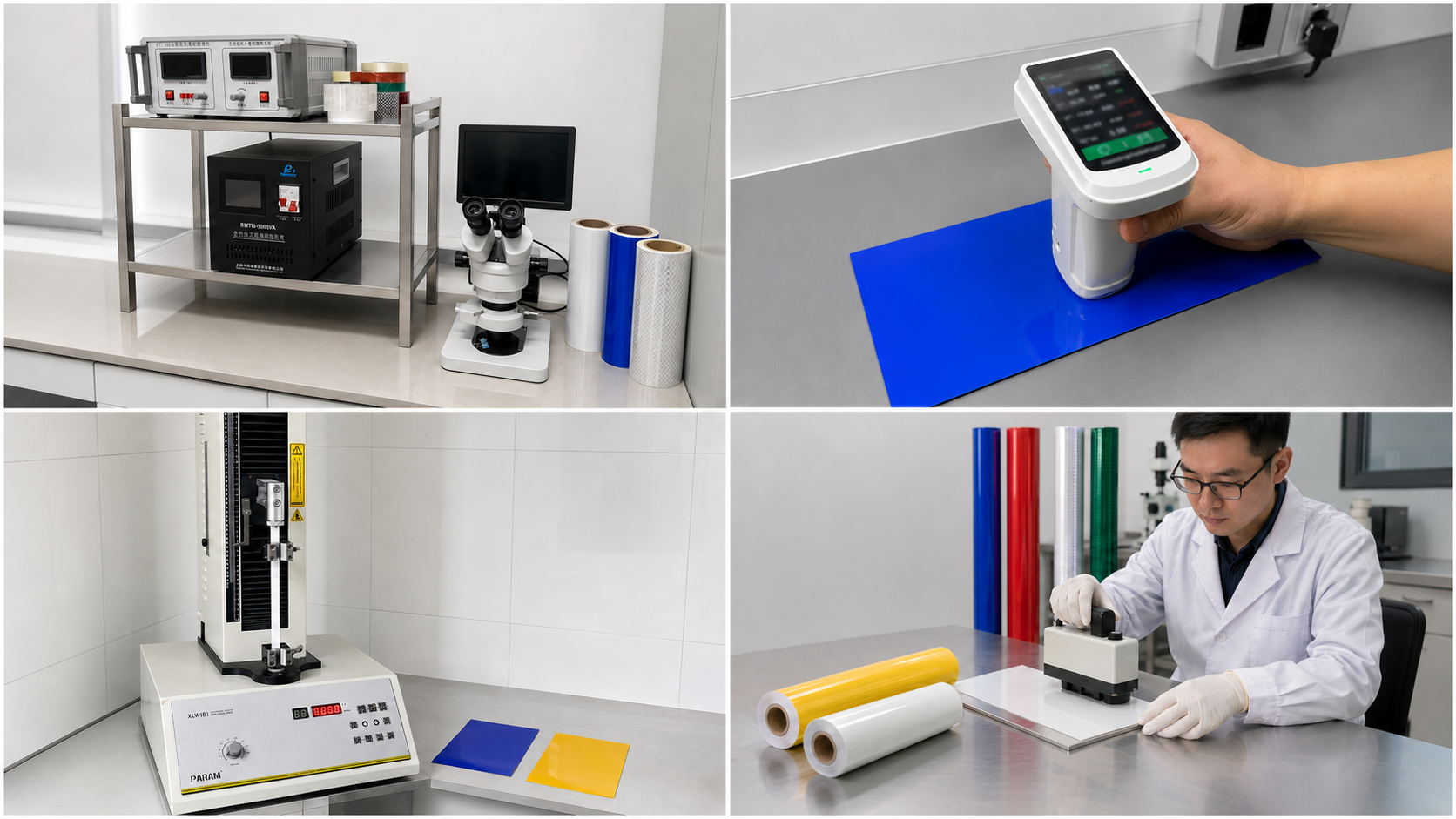
Frequently Asked Questions
Why is my reflective vinyl peeling from the edges?
The most common causes are surface contamination, insufficient edge pressure, low application temperature, stretching during installation or use on an incompatible substrate. Inspect whether the adhesive remains on the film or panel before deciding on corrective action.
Is edge lifting always a reflective sheeting defect?
No. Edge lifting can result from the material, substrate, storage or installation process. A controlled comparison on a clean standard panel and the actual production substrate helps isolate the cause.
Can curled reflective sheeting still be used?
Mild roll memory may reduce after the material is conditioned and laid flat. Severe or uneven curling, liner distortion or curl that prevents accurate converting should be quarantined and investigated before use.
Why does UV ink peel off after 24 to 72 hours?
Delayed UV ink failure may be caused by weak surface compatibility, excessive ink thickness, over-curing, residual stress or a material that does not have a UV-printable surface. Immediate testing alone may not reveal this problem.
Can any reflective sheeting be UV printed?
No. UV printing requires compatibility between the reflective sheeting surface, ink and curing system. Standard untreated PET reflective sheeting often has poor UV ink adhesion, while qualified printable acrylic or specialty products may perform better.
How do I test ink adhesion on reflective sheeting?
Print a controlled sample, allow it to cure, perform a consistent scratch or cross-hatch tape test and repeat the test after 24 and 72 hours. Record all printer and curing settings.
What causes reflective sheeting to crack?
Cracking may result from excessive bending, cold processing, blunt cutting tools, use of a rigid product on a curve, overly brittle ink, chemical exposure, thermal cycling or long-term UV aging.
Why are there dark spots in reflective sheeting?
Dark spots may result from pressure damage, trapped moisture, abrasion, excessive heat, opaque ink or damage to the glass-bead or microprismatic optical structure.
Can peeling reflective sheeting be glued back down?
Only limited recent edge lifting may be repairable, and only when the original adhesive remains clean and the product instructions permit repair. Widespread peeling, cracking or internal delamination normally requires replacement.
How should reflective sheeting rolls be stored?
Store rolls in a cool, dry indoor area, protected from direct sunlight and supported through the core or in their original cartons. Partially used rolls should be repackaged, and the manufacturer’s storage temperature, humidity and shelf-life instructions should be followed.
Conclusion
Reflective sheeting defects cannot be diagnosed reliably from the word “peeling” alone.
First determine whether the failure occurred at the substrate, adhesive, face film, optical layer, printed ink or laminate. Then review material selection, storage, surface preparation, printing, curing, application and field exposure.
A structured investigation prevents unnecessary replacement, helps suppliers identify genuine batch problems and gives sign manufacturers more reliable production results.
If you are experiencing reflective sheeting peeling, curling, cracking, delamination or ink adhesion failure, send ABLAZE your material specification, processing records and failure photographs. Our team can help evaluate the likely cause and recommend a suitable reflective sheeting system for your project.
RELATED NEWS

Sun, Sand and a 50°C Container: Getting Reflective Sheeting Through a Hot Climate
In hot regions, reflective sheeting can start ageing before it reaches the sign shop. UV, heat, dust and humidity each attack a different part of the product, and each needs its own defence.Picture a distributor in a hot coastal city who receives a container of prismatic sheeting in midsummer. It si
